




Table of Contents
- How Long Do Outdoor Flags Last on Average?
- The Best Fabric for Outdoor Flags and How It Affects Durability
- Weather Conditions That Shorten How Long Outdoor Flags Last
- How to Prevent Flag Fraying and Extend Its Life
- How to Clean an Outdoor Flag the Right Way
- When to Retire a US Flag: Signs It's Time to Replace It
- Cost-Per-Day Analysis: What Flag Quality Actually Costs You
- Conclusion
Last Updated: August 24, 2026
How Long Do Outdoor Flags Last on Average?
Outdoor flags last anywhere from 90 days to several years, depending on material, climate, and maintenance. The "90-day rule" is a reasonable baseline for continuous outdoor display in moderate conditions, but well-made, properly cared-for flags last considerably longer. Flags that fail early almost always do so for preventable reasons: wrong material for the environment, no maintenance routine, and constant 24-hour display without rotation.
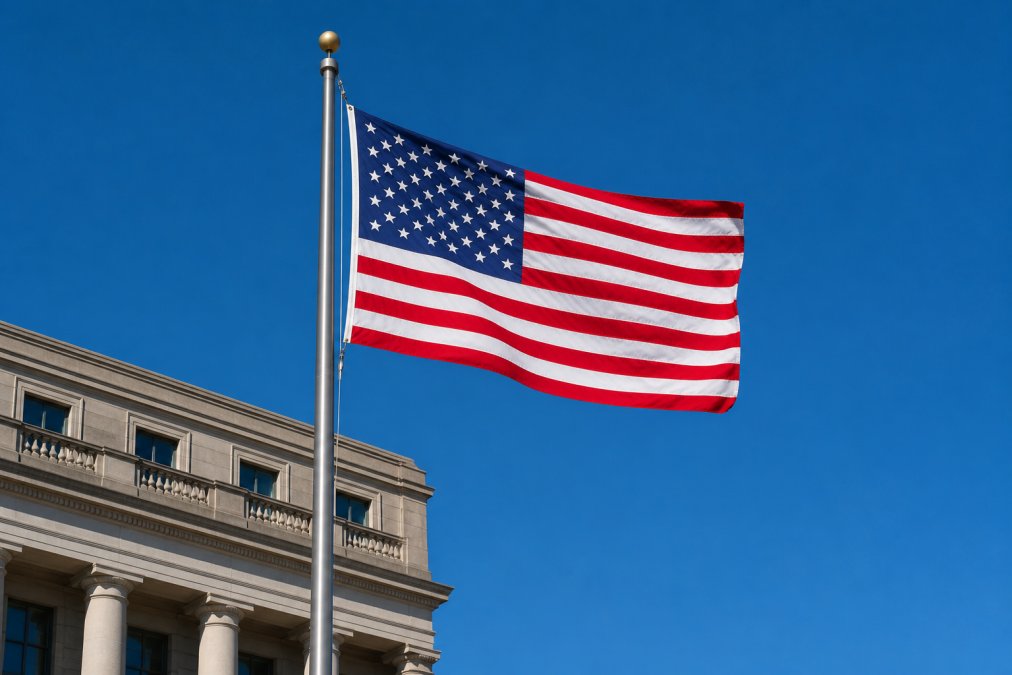
At US Patriot Colors, we work with procurement officers, facilities managers, and government agencies who need flags that hold up under demanding conditions. The short answer: nylon flags in moderate climates typically last 90 to 180 days of continuous display. Commercial-grade polyester flags in high-wind environments may last 60 to 90 days of constant flying, but can stretch to a year or more with proper rotation and care. Cotton flags rarely exceed 30 to 60 days before showing significant wear.
The Best Fabric for Outdoor Flags and How It Affects Durability
Fabric choice is the single biggest variable in flag longevity. Material durability depends on how synthetic fibers respond to UV degradation, wind load, moisture retention, and abrasion over time.
Nylon: The Standard for Residential and Light Commercial Use
Nylon bunting is the most widely used material for outdoor American flags. It's lightweight, flies in light breezes, and puts less stress on grommets and hem stitching during high-wind events. The tight weave resists moisture retention, dries quickly after rain, and holds colorfastness well under prolonged sun exposure.
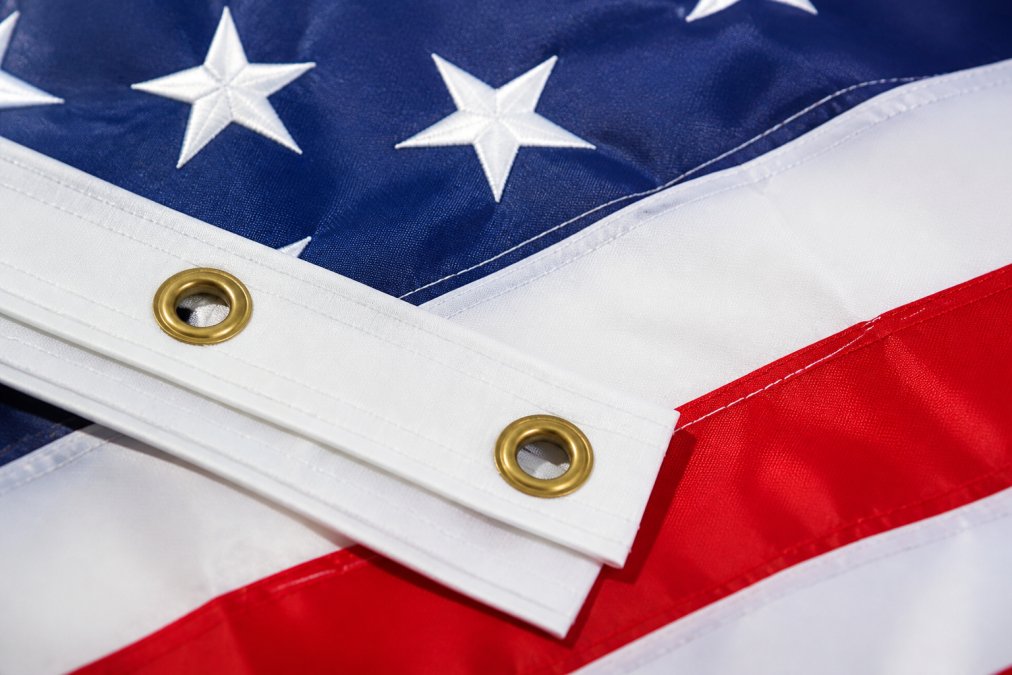
For residential use, schools, small offices, and municipal buildings with moderate wind loads, nylon is the right choice. A quality nylon flag with embroidered stars and sewn stripes, like the 3x5 American Flag Outdoor Nylon Embroidered Made in USA, is built for long-term outdoor display. Solid brass grommets resist corrosion, and additional stitching at the fly corners addresses the most common failure point.

The limitation: nylon isn't ideal for sustained high-wind environments above 30 mph, where heavier polyester alternatives perform better.
Polyester: Built for High-Wind and Commercial Environments
Two-ply polyester is the commercial-grade standard for high-wind areas, flagpoles above 25 feet, and continuous-display installations. The denser weave gives polyester significantly higher tensile strength than nylon and handles abrasion better, particularly at the fly end where wind load causes the most wear.
The trade-off is weight, polyester requires a stronger breeze to unfurl fully, making it less ideal for low-wind residential settings. For commercial flagpoles, government installations, and coastal environments, polyester is the right material. The American Flag for High Winds - 2-Ply Polyester, Made in USA uses open-weave construction that reduces wind resistance while maintaining seam integrity.

Cotton: Traditional but Limited for Outdoor Display
Cotton carries historical weight but performs poorly outdoors. Natural fibers absorb moisture, accelerating mildew, fading, and fabric breakdown. UV degradation hits cotton harder than synthetics, and salt air corrosion compounds the problem in coastal climates. Cotton flags are appropriate for indoor ceremonial display and short-term outdoor events only.
Weather Conditions That Shorten How Long Outdoor Flags Last
Weather isn't a single factor, wind, sun, moisture, and atmospheric conditions each attack a flag differently. Understanding which stressor dominates your environment changes how you select and maintain your flag.
Wind Load and Abrasion
Wind is the primary mechanical killer of outdoor flags. Constant wind load creates a whipping action at the fly end that breaks down seam integrity, frays hem stitching, and eventually tears fabric. In high-wind areas, this process accelerates dramatically.
Flags that wrap around the flagpole and abrade against it fail faster than flags that fly freely. A device like the Neverfurl Complete Kit eliminates this problem by allowing each rotator to move independently with the wind, preventing wrapping and reducing abrasion-related wear significantly.

UV Degradation and Sun Exposure
Sun exposure is the second major factor. UV degradation breaks down synthetic fibers at the molecular level, so a flag in Phoenix, Arizona will fade and weaken faster than the same flag in Seattle, Washington. Flags with aniline-dyed fabrics and UV-resistant treatments hold up considerably better under intense sun exposure. outdoor sign durability.
According to guidance from the Flag Manufacturers Association of America, flags displayed in high-UV environments should be inspected monthly for color degradation and fabric stress.
Salt Air, Moisture, and Regional Climate Factors
Salt air corrosion is an underappreciated durability factor for coastal installations. Salt deposits accelerate fiber breakdown and attack metal components, grommets, and hardware. Coastal facilities often go through flags two to three times faster than inland counterparts using the same product.
Regional climate-specific lifespan patterns:
Climate Type |
Primary Stressor |
Expected Lifespan (Continuous Display) |
|---|---|---|
Coastal (salt air, humidity) |
Salt corrosion + moisture retention |
60-90 days |
Desert / High-UV (Southwest) |
UV degradation + heat |
90-120 days |
High-wind plains (Midwest) |
Wind load + abrasion |
60-90 days |
Temperate / Moderate (Northeast, Pacific Northwest) |
Balanced wear |
90-180 days |
Extreme cold (Mountain West, Upper Midwest) |
Freeze-thaw cycles + wind |
90-150 days |
Nylon's quick-dry properties give it an edge in humid climates where moisture retention accelerates mildew and weakening.
How to Prevent Flag Fraying and Extend Its Life
Fraying is the most visible sign of flag wear and the most preventable. The fly end takes the most punishment from constant wind load. Once fraying starts, it accelerates quickly if left unaddressed.
These steps extend flag life:
- Rotate flags on a schedule. Rotate in a backup every 30 to 45 days to distribute wear and give each flag recovery time.
- Bring flags in during severe weather. High-wind events, storms, and ice shorten flag life fastest. The flag code permits bringing flags in during inclement weather.
- Check and replace worn hardware. Frayed halyards and corroded grommets create friction points that accelerate fabric wear. Inspect flagpole hardware monthly.
- Repair minor fraying early. Trim small frays at the fly end and re-hem before they become full tears.
- Avoid flag-to-pole contact. Anti-furl devices prevent wrapping and are one of the highest-impact maintenance investments for high-traffic installations.
- Store flags properly when not in use. Clean, dry storage away from direct sunlight prevents UV degradation and mildew.
How to Clean an Outdoor Flag the Right Way
Regular cleaning prevents dirt, pollution, and salt deposits from degrading fabric and dyes over time.
For nylon and polyester flags:
- Hand wash in cold water with mild detergent. Avoid harsh chemicals, bleach, or fabric softeners.
- Rinse thoroughly to remove all soap residue.
- Air dry completely before folding or storing. Never store a damp flag.
- For machine washing: use a gentle cycle, cold water, and place the flag in a mesh laundry bag.
For embroidered flags:
Avoid aggressive scrubbing directly on embroidered areas, as thread can loosen over time.
Frequency: Clean every 30 to 60 days in moderate climates. Coastal and high-pollution environments warrant monthly cleaning.
As documented in the United States Flag Code guidance, a flag that is soiled or worn should be cleaned or repaired to maintain its dignity.
When to Retire a US Flag: Signs It's Time to Replace It
The United States Flag Code (4 U.S.C. § 8) states that a flag no longer fitting for display should be destroyed in a dignified way, preferably by burning.
Clear signs it's time to replace:
- Fraying at the fly end extending more than one inch into the fabric
- Fading or color loss where red, white, and blue are no longer clearly distinguishable
- Tears or holes in the body of the flag
- Mildew staining that doesn't come out with cleaning
- Damaged or missing grommets that prevent proper attachment
- Significant abrasion wear where fabric has thinned or become translucent
If you wouldn't fly the flag at a formal government ceremony, it's time to retire it. Flag retirement ceremonies are conducted by the American Legion, VFW posts, and Boy Scout troops across the country. Many communities hold organized retirement events on Flag Day, June 14th.
Cost-Per-Day Analysis: What Flag Quality Actually Costs You
Most procurement decisions focus on purchase price. The more useful metric is cost per day, what you actually spend per day of dignified display. A cheaper imported flag lasting 45 days costs more per day than a higher-quality domestic flag lasting 150 days.
Cost-Per-Day Formula:
Flag purchase price ÷ Days of dignified display = Cost per day
What drives days of dignified display up:
- Commercial-grade construction (2-ply polyester for high-wind, quality nylon for moderate conditions)
- Proper maintenance and cleaning schedule
- Rotation between two flags rather than continuous flying
- Anti-furl hardware that prevents pole abrasion
- Bringing flags in during severe weather
What drives it down:
- Continuous 24-hour display without rotation
- No cleaning or maintenance routine
- Wrong material for the climate
- Cheap grommets that corrode and create friction wear
- Imported flags with lower fabric density and weaker seams
For government agencies managing flags across multiple buildings, the cost-per-day framework makes the case for bulk procurement of quality domestic flags over repeated emergency replacements. Administrative burden of frequent replacements adds real cost beyond the flag price itself.
Flags fail early for predictable, avoidable reasons: wrong material for the environment, no maintenance routine, and continuous display without rotation. US Patriot Colors builds exclusively made-in-the-USA flags with commercial-grade construction, embroidered stars, sewn stripes, reinforced fly corners, and solid brass grommets, designed to extend your replacement cycle and keep your display dignified. We are excellent at custom flags. Whether you need a standard nylon flag for a residential pole or a 2-ply polyester commercial flag for a high-wind coastal installation, our team can help you find the right fit. Shop Now and get flags built to last.
Frequently Asked Questions
How long should an outdoor flag typically last?
Most outdoor flags last anywhere from 90 days to two years, depending on the material and display conditions. A nylon flag flown daily in moderate weather often lasts six months to a year. A 2-ply polyester flag in a high-wind or coastal environment may need replacement every 90 days. Flags stored indoors overnight and cleaned regularly can last significantly longer, making maintenance habits just as important as material choice.
Does fabric type impact how long an outdoor flag lasts?
Fabric is one of the biggest factors in flag longevity. Nylon offers excellent colorfastness and weather resistance for most residential and light commercial settings. Heavy-duty 2-ply polyester is built for high-wind areas and commercial flagpoles, with greater tensile strength and fabric density. Cotton, while traditional, retains moisture and degrades faster outdoors. For long-term outdoor display, nylon or commercial-grade polyester are the most durable options available.
When should a U.S. flag be retired?
A U.S. flag should be retired when it shows visible fraying along the fly end, significant fading that dulls the colors, torn or separated seams, or damage that cannot be repaired. The U.S. Flag Code does not specify an exact replacement timeline, but it does state that a flag should be displayed in a dignified condition. Once a flag is beyond repair, the proper method of retirement is burning it in a respectful ceremony, often organized by veterans' organizations.
Can proper maintenance extend the lifespan of an outdoor flag?
Yes, consistent maintenance makes a measurable difference. Bringing a flag indoors during severe weather, washing it gently every few months to remove dirt and salt deposits, checking grommets and hem stitching regularly, and using an anti-furl device to prevent the flag from wrapping around the pole all reduce wear significantly. A well-maintained nylon flag can last twice as long as a neglected one flown in similar conditions, making maintenance one of the most cost-effective strategies available.
This article was written using GrandRanker


