




Table of Contents
- Why Salt Air Destroys Ordinary Flags
- Nylon vs. Polyester Flags for Salt Air Resistance
- Heavy-Duty Nylon Flags That Withstand Coastal Climates
- Best Flagpole Material for Salt Air Environments
- Hardware That Resists Salt Corrosion: Grommets and Headers
- How to Maintain Flags in Coastal Areas
- Environmental Impact and Responsible Flag Disposal
Last Updated: September 4, 2026
Why Salt Air Destroys Ordinary Flags
Salt air is one of the harshest environments for outdoor flags. The combination of salt spray, moisture, and wind creates a corrosive atmosphere that breaks down standard flag materials far faster than inland conditions. If you've ever replaced a flag every few months in a coastal area, you've experienced this firsthand.
The chemistry is straightforward: salt particles suspended in ocean air settle on fabric and hardware, accelerating oxidation and material degradation. Polyester flags fade and weaken under this assault. Standard steel hardware rusts within weeks. Even the stitching deteriorates when salt crystals work their way into the seams.
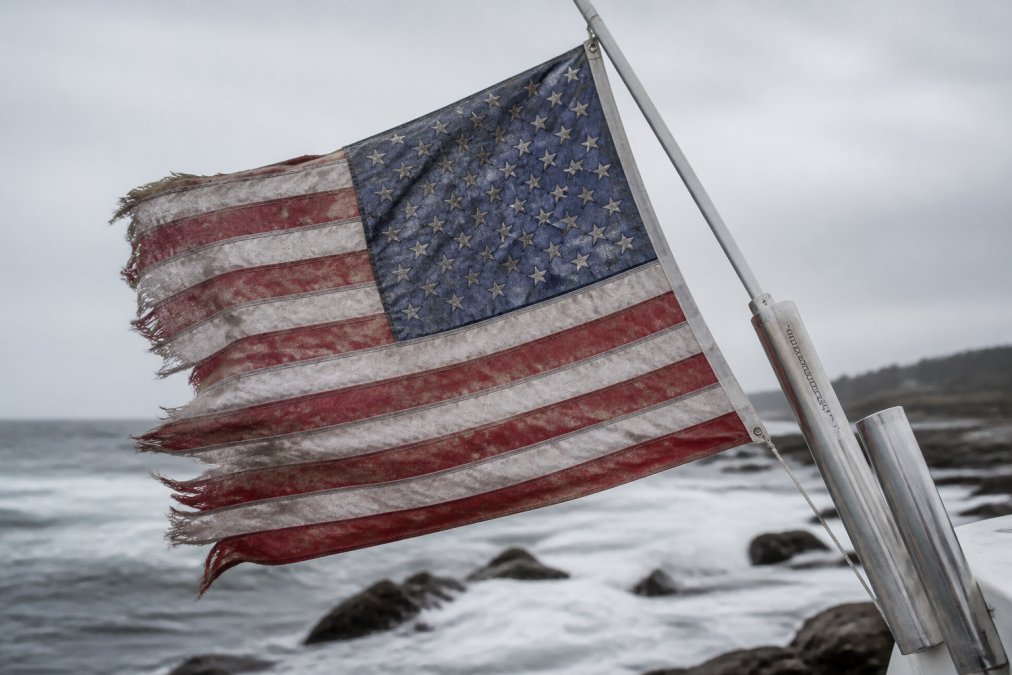
What makes this problem worse is that ordinary flags are designed for general outdoor use, not salt air environments. They lack the material density, hardware specifications, and construction methods needed to withstand marine exposure. Most homeowners and facility managers don't realize this distinction until they've gone through three or four flags in a single year, wasting money and constantly dealing with maintenance headaches.
The good news: flags designed specifically for salt air resistance exist. They combine the right materials, hardware, and construction methods to last years instead of months. Understanding what makes these flags different is the first step toward making a smart purchase.
Nylon vs. Polyester Flags for Salt Air Resistance
When choosing a flag for salt air, the fabric choice matters more than most people realize. Nylon and polyester are the two dominant synthetic materials, but they perform very differently in coastal environments.
Nylon flags are the superior choice for salt air. Heavy-duty nylon (typically 200-denier weight) has higher tensile strength and tear resistance than polyester. More importantly, nylon dries faster and resists moisture absorption better than polyester, which means salt crystals don't embed themselves as deeply into the fibers. Aniline-dyed nylon, where color is embedded during the dyeing process rather than printed on, shows exceptional fade resistance and color retention under UV exposure and salt spray.
Nylon's weakness is cost. A quality nylon flag costs more upfront than polyester alternatives. But the durability math works in nylon's favor: a nylon flag lasting 3-4 years beats replacing a cheaper polyester flag every 6-9 months.
Polyester flags are lighter and less expensive, which makes them appealing for budget-conscious buyers. Printed polyester with UV protection and anti-rain coating can help extend life in coastal conditions. However, standard single-ply polyester absorbs more moisture than nylon, and that moisture carries salt deeper into the fabric. The printed design also fades faster than aniline-dyed colors, especially in intense coastal sunlight.
2-ply polyester is a heavy-duty alternative worth considering, especially for high-wind coastal locations. Two layers of polyester are sewn together, creating a thicker, more abrasion-resistant flag that holds up in sustained strong winds better than single-ply materials. The extra weight means 2-ply polyester flags need more wind to fly fully, but that same weight reduces the violent snapping that shreds lighter fabrics in gale conditions. If your flag location regularly sees high winds alongside salt air, 2-ply polyester is a durable option that bridges the gap between standard polyester and heavy-duty nylon.
The construction method matters as much as the fabric. A nylon flag with reinforced stitching, four rows on the fly edge, reinforced corners, and a heavy canvas header will outlast a thinner nylon flag with minimal stitching. At US Patriot Colors, we use 200-denier aniline-dyed nylon with reinforced construction specifically designed for demanding coastal environments.
Heavy-Duty Nylon Flags That Withstand Coastal Climates
For salt air resistance, heavy-duty nylon flags are the industry standard. These flags combine the right fabric weight, dye process, and construction to handle years of coastal exposure.
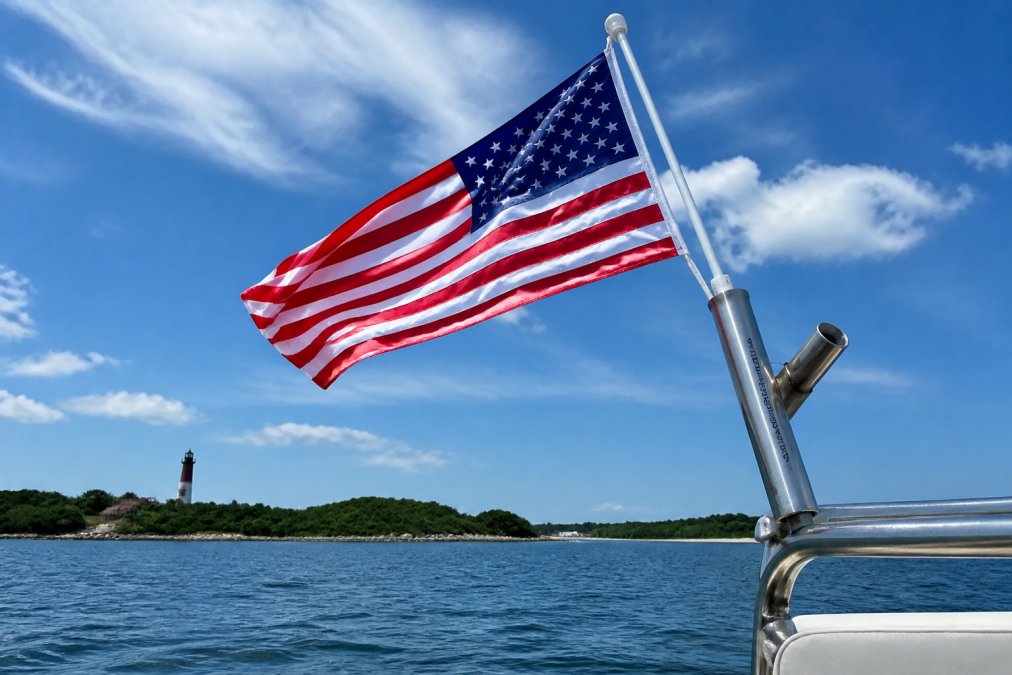
What makes nylon "heavy-duty" is the fabric weight, measured in denier. Standard nylon is 75-100 denier. Heavy-duty nylon is 200 denier or higher, which means thicker, denser fibers. This density provides two advantages: higher abrasion resistance (so wind snap and rope friction don't shred the fabric) and slower moisture penetration (so salt doesn't reach the fiber core as quickly).
Aniline dyeing is the second critical factor. Unlike printed designs that sit on the fabric surface, aniline dyes bond chemically with the nylon fibers during manufacturing. This means the color doesn't fade from the outside in — it fades uniformly and much more slowly. A well-made aniline-dyed nylon flag can maintain vibrant colors for 5+ years in coastal climates.
The third factor is construction. Reinforced stitching, specifically four rows of stitching along the fly edge where stress concentrates, prevents the flag from unraveling. Reinforced corners and a heavy canvas header add structural integrity. Our flags use 1.5-inch reinforced stitching at fly corners and 3.5-inch reinforced hem stitching at top and bottom — commercial-grade construction built to last.
These flags cost more than standard options. A 3x5 heavy-duty nylon flag from US Patriot Colors, such as the 3x5 Green Mountain Boys Flag - Nylon Outdoor - Made in USA for $67.95, offers superior durability. The durability difference is real: a heavy-duty nylon flag lasts 3-4 years in salt air, while cheaper flags last 6-9 months. Over five years, the nylon flag costs less per year and eliminates constant replacement hassle.

Best Flagpole Material for Salt Air Environments
The flagpole itself is as critical as the flag. Salt air corrodes steel, aluminum, and wood at different rates, and the wrong pole choice can undermine even the best flag.
Stainless steel is the gold standard for salt air flagpoles. Stainless steel contains chromium, which forms a protective oxide layer that resists corrosion (nist.gov). In salt air environments, stainless steel poles maintain structural integrity and appearance for 10+ years with minimal maintenance. The downside is cost — stainless steel poles are 2-3 times more expensive than standard steel.
Aluminum poles are lighter and less expensive than stainless steel, but they corrode in salt air. Aluminum oxide (the corrosion byproduct) appears as white powder or pitting on the pole surface. While aluminum doesn't rust like steel, the corrosion weakens the pole over time and creates maintenance headaches.
Fiberglass poles are becoming more common for coastal applications. Non-conductive solid fiberglass doesn't corrode, rust, or degrade in salt air. Fiberglass poles are durable, low-maintenance, and suitable for marine environments. Our Rod Holder Flag Pole - Fits Fishing Rod Holders uses non-conductive solid 1/2-inch fiberglass construction, making it ideal for boats and coastal installations where corrosion resistance is essential.

The pole diameter and wall thickness also matter. Thicker-walled poles resist wind snap better than thin-walled alternatives. A 1/2-inch solid fiberglass pole or a 1.5-2 inch stainless steel pole provides the structural support needed for larger flags in high-wind coastal areas.
Thinking of buying from Allegiance Flags? Check out our comparison: Allegiance Flag Supply Review: Prices, Sizes & Alternatives. For salt water you want the high winds flag.
Hardware That Resists Salt Corrosion: Grommets and Headers
Grommets and headers are where many flag systems fail in salt air. Cheap hardware corrodes quickly, making flags impossible to attach or causing the flag to tear around the grommet holes.
Brass grommets are the standard for salt air applications. Brass (an alloy of copper and zinc) naturally resists corrosion better than steel (astm.org). Solid brass grommets — not plated or hollow — maintain integrity through years of coastal exposure. When you see a flag with corroded, discolored grommets or rust stains spreading from the grommet holes, that's a sign the hardware wasn't marine-grade.
Our flags use solid brass grommets, which is the right choice for coastal environments.
Canvas headers (also called pole hems or sleeves) are the reinforced strip of fabric at the top of the flag where grommets are installed. A heavy canvas header distributes the stress load across a wider area, preventing the grommet holes from tearing out under wind load. A 1-2 inch canvas header is standard for outdoor flags; commercial-grade flags use thicker headers with multiple rows of stitching.
The combination of brass hardware and reinforced canvas headers creates a system that withstands years of salt air exposure. Cheap flags use lightweight headers and plated (not solid) grommets, which fail within months in coastal climates.
| Component | Salt Air Performance | Best Choice | Why It Matters |
|---|---|---|---|
| Grommets | Corrodes quickly | Solid brass | Resists oxidation, maintains attachment strength |
| Header | Tears under stress | Heavy canvas, reinforced | Distributes wind load, prevents grommet failure |
| Stitching | Weakens in salt spray | 4+ rows on fly edge | Prevents unraveling, maintains structural integrity |
| Fabric edge | Frays and unravels | Double-fold with reinforcement | Prevents salt penetration at seams |
How to Maintain Flags in Coastal Areas
Even the best flags need maintenance in salt air environments. Regular care extends flag life significantly and prevents corrosion from spreading.
Rinse your flag monthly with fresh water to remove salt deposits. Use a gentle spray — don't scrub or wring the fabric. Salt crystals embedded in the fibers accelerate degradation, so removing them regularly is one of the simplest maintenance tasks. This is especially important after storms or high-wind events when salt spray is heaviest.
Inspect grommets and hardware quarterly. Look for discoloration, corrosion, or rust stains. If you spot corrosion starting, clean the affected area with a soft brush and fresh water. Catch corrosion early before it weakens the hardware.
Check stitching along the fly edge for separation or fraying. The fly edge (the edge that flaps in the wind) experiences the most stress. If stitching is coming loose, repair it immediately with heavy-duty thread to prevent the tear from spreading.
Rotate or replace your flag annually if it's in constant use. Even well-made flags eventually show wear in salt air — fading, minor fraying, or slight weakening in the fabric. Replacing flags on a schedule (rather than waiting for failure) prevents the embarrassment of a tattered flag and maintains professional appearance.
Store flags indoors during off-season if you remove them seasonally. Salt air continues to corrode hardware and degrade fabric even when the flag isn't flying. Indoor storage in a cool, dry location slows degradation significantly.
For government and municipal installations, these maintenance practices should be documented in a flag care protocol. Regular maintenance extends flag life from 1-2 years (with neglect) to 4-5 years (with basic care).
Environmental Impact and Responsible Flag Disposal
Flags wear out, and disposing of them responsibly matters — especially for ceremonial or government flags, where proper retirement is expected.
Synthetic flag disposal depends on condition. Flags that are still structurally sound but faded or worn can be donated to schools, youth organizations, or community groups for educational use or crafts. Many nonprofits accept used flags for recycling programs.
Flags that are too damaged for use should be recycled if possible. Nylon and polyester are recyclable plastics, though most curbside recycling programs don't accept flag-sized items. Contact your local recycling center to ask about bulk textile recycling options. Some communities have textile-specific recycling programs that accept worn flags.
For ceremonial flags, many veterans' organizations and flag retirement ceremonies accept worn flags for respectful retirement. These ceremonies are especially common for American flags, where proper retirement is considered important.
Custom flag considerations: When you invest in custom flags from US Patriot Colors, the durability advantage means you'll dispose of fewer flags over time. A flag lasting 4-5 years instead of 6-9 months reduces waste significantly — an often-overlooked environmental benefit of choosing durable, made-in-USA flags over cheaper imported alternatives that require frequent replacement.
When you do need to replace flags, choosing durable nylon flags with heavy-duty construction reduces overall waste. A single 4-year flag has lower environmental impact than five 9-month flags, even accounting for the larger initial resource investment.
Coastal flag displays require thinking beyond the initial purchase. The right materials — heavy-duty nylon fabric, solid brass hardware, reinforced construction — cost more upfront but eliminate the cycle of constant replacement and maintenance frustration. Our flags are engineered specifically for demanding environments like salt air, using 200-denier aniline-dyed nylon, solid brass grommets, and reinforced stitching that matches commercial-grade standards. For government agencies, municipalities, and facilities managers handling flags in coastal climates, investing in flags built to last transforms flag maintenance from a recurring headache into a solved problem. Shop our custom flags designed for your specific environment and get durability that justifies the investment.
Frequently Asked Questions
Q: What material is best for flags in salt air?
A: Heavy-duty 200-denier aniline-dyed nylon is the best choice for salt air environments. Nylon offers superior tensile strength, faster drying times, and excellent resistance to salt spray corrosion compared to polyester. The aniline dyeing process creates deeper, more fade-resistant colors that maintain vibrancy even under constant UV exposure and salt air degradation. Brass grommets and reinforced stitching at the fly edges further protect against the whipping effect and abrasion that salt air accelerates.
Q: How often should you replace a flag exposed to salt air?
A: A high-quality nylon flag in a coastal climate typically lasts 2-3 years with proper maintenance, compared to 6-12 months for standard polyester flags. Factors affecting longevity include flag size, wind speed, maintenance frequency, and whether the flag is flown continuously or seasonally. Inspect your flag monthly for fraying, color fading, and grommet corrosion. Replace it immediately if you notice significant wear at the fly corners or header deterioration, as these areas bear the most stress in high-wind salt air environments.
Q: Are brass grommets really necessary for coastal flags?
A: Yes, solid brass grommets are essential for salt air applications. Brass resists corrosion far better than steel or aluminum, which can degrade and weaken under salt spray exposure. Corroded grommets eventually fail, causing the flag to slip or tear. Reinforced stitching around grommet areas prevents stress concentration that salt air and wind snap forces would otherwise exploit. This combination of brass hardware and heavy-duty stitching extends flag life significantly in marine environments.
Q: How do I prevent my flag from fraying in coastal winds?
A: Fraying occurs when wind snap forces and salt air weaken the fly edge stitching. Prevent this by choosing flags with four rows of stitching on the fly edge and reinforced hem stitching at top and bottom. Inspect your flag monthly and retie or re-secure any loose areas. Keep your halyard in good condition — a worn halyard allows excessive flag movement that accelerates fraying. Store your flag indoors during extreme weather or off-season months. Regular maintenance and prompt repairs to small tears stop fraying before it spreads across the entire flag.


