


Table of Contents
- Why Municipalities Need Liberty Flag Alternatives
- Best Made in USA Flags for Civic Display
- Commercial Grade Flagpoles for Municipalities
- Flag Maintenance and Replacement Schedule
- U.S. Flag Code Compliance for Municipal Displays
- Material Durability: Nylon, Polyester, and 2-Ply Options
- Conclusion
- Frequently Asked Questions
Last Updated: August 30, 2026
Why Municipalities Need Liberty Flag Alternatives
Municipalities face a constant challenge: choosing flags that represent civic identity while withstanding demanding environmental conditions. The standard approach, purchasing imported flags and replacing them every few months, drains budgets and creates maintenance headaches that facilities managers know all too well.
This is where understanding liberty flag alternatives becomes essential. Municipalities aren't looking for decorative banners. They need symbols of governance and community pride that survive salt air, high winds, UV exposure, and the wear that comes with continuous outdoor display. The wrong choice costs thousands in replacement cycles. The right choice, made in USA flags built for institutional durability, pays dividends in longevity and appearance.
At US Patriot Colors, we've worked with municipal procurement teams managing flags across multiple government buildings, public parks, and civic spaces. What we've learned is that most municipalities inherit flag displays designed without considering durability standards, material performance, or the specific protocols that apply to official civic displays.
The stakes are higher than aesthetics. A faded, tattered flag flying over a municipal building sends an unintended message. Proper flag display protocols, compliance with U.S. Flag Code standards, and material selection directly affect how your community is perceived. This guide covers the alternatives available to municipalities, the specifications that matter, and the practical considerations that separate adequate displays from exceptional ones.
Best Made in USA Flags for Civic Display
When municipalities evaluate flag options, the origin of manufacture matters more than many realize. Made in USA flags offer consistent quality control, support for domestic production, and the durability specifications that institutional settings demand.
The Sons of Liberty Nylon Sewn Flag 3x5 represents the durability standard many municipalities should consider. This flag uses aniline-dyed nylon with sewn stripes, not printed, meaning the colors remain vibrant through years of outdoor exposure. The construction includes a one-inch double fold with two rows of stitching on edges and four rows on the fly edge. Reinforced stitching at corners and solid brass grommets ensure this flag withstands high-wind conditions without tearing or fraying. For municipalities managing civic displays on commercial-grade flagpoles, this construction approach delivers the strength retention under UV exposure that institutional settings require.

The Whiskey Rebellion Flag offers historical significance alongside practical durability. Custom printed and made to order in the USA, this flag commemorates one of the first tests of federal authority in the new republic. Available in sizes from 12x18 inches to monumental 20x30 feet, it works for institutions managing multiple display locations. The construction uses premium nylon with aniline-dyed colors that resist fading, along with four rows of stitching on the fly edge and reinforced corner stitching. For municipalities seeking flags that carry historical meaning while meeting durability standards, this alternative combines symbolism with institutional-grade performance.
The 1776 Flag provides a patriotic option built with the same durability standards. Made in USA with durable nylon fabric and solid brass grommets, this flag includes one-inch double edge folds and reinforced stitching throughout. The aniline dye process ensures colors remain deep and bright over time, resisting UV fading that degrades imported alternatives. Available in sizes up to 15x20 feet, it accommodates both small municipal buildings and larger civic installations.
For municipalities exploring symbolic alternatives beyond the standard American flag, these options deliver the durability and institutional-grade construction that commercial flagpole systems require. Each uses materials and construction methods designed for long-term outdoor display in demanding conditions.
Commercial Grade Flagpoles for Municipalities
Municipalities managing civic displays need flagpole systems engineered for institutional settings, not residential installations. Commercial-grade flagpoles differ fundamentally from consumer options in structural specifications, wind-rating capacity, and material durability.
Commercial flagpoles feature heavier wall thickness, superior corrosion resistance, and wind-rated specifications that meet the demands of public spaces. These systems are designed to handle continuous display, frequent flag changes, and exposure to salt air, high winds, and temperature extremes. The distinction matters: a residential pole rated for 35 mph winds will fail in coastal environments or areas prone to severe weather. Municipal installations require poles rated for sustained wind exposure, typically 50+ mph capacity minimum.
The halyard system, the mechanism that raises and lowers flags, represents a critical component in institutional installations. External halyards are visible and require more frequent maintenance as they're exposed to UV and weather. Internal halyards, housed within the pole, offer better protection and require less frequent servicing. For municipalities managing multiple flags or frequent flag changes, internal halyard systems reduce maintenance burden and extend the lifespan of the entire installation.
Wall Mount Flagpoles for Schools and Government Buildings
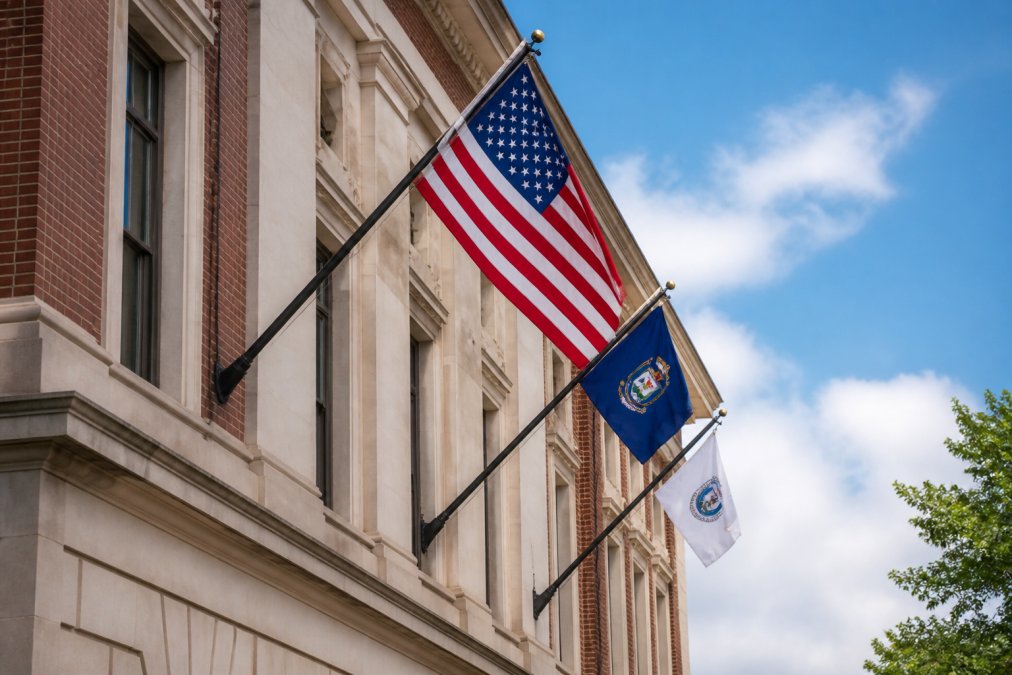
Schools, embassies, and government buildings typically employ wall mount flagpoles rather than freestanding poles. These systems mount directly to building facades and offer practical advantages for institutional settings: they save ground space, integrate with architectural design, and provide secure installation on existing structures.
Wall mount flagpoles must accommodate the specific flag protocols that apply to schools and government buildings. Schools flying the American flag alongside a state flag require careful positioning: the state flag is slightly smaller and positioned below the federal flag. This isn't aesthetic preference, it's proper flag etiquette for state facilities. The common misconception that flags must be equal size applies only to federal facilities, not state facilities. Wall mount systems must support this positioning without compromising either flag's visibility or movement.
For schools managing multiple flags, wall mount installations reduce the visual footprint while maintaining compliance with flag display standards. The mounting brackets must be rated for the combined weight of multiple flags, particularly in high-wind locations. Institutional-grade brackets use stainless steel or powder-coated steel to resist corrosion and maintain structural integrity through years of weather exposure.
Government buildings and embassies benefit from wall mount systems because they integrate seamlessly with architectural elements. The installation doesn't require ground-level space, making it ideal for urban settings or buildings with limited outdoor area. The mounting height should position flags prominently while ensuring they don't interfere with building operations or present safety hazards.
Flag Maintenance and Replacement Schedule
Municipalities managing multiple flag displays need practical schedules for inspection, maintenance, and replacement.
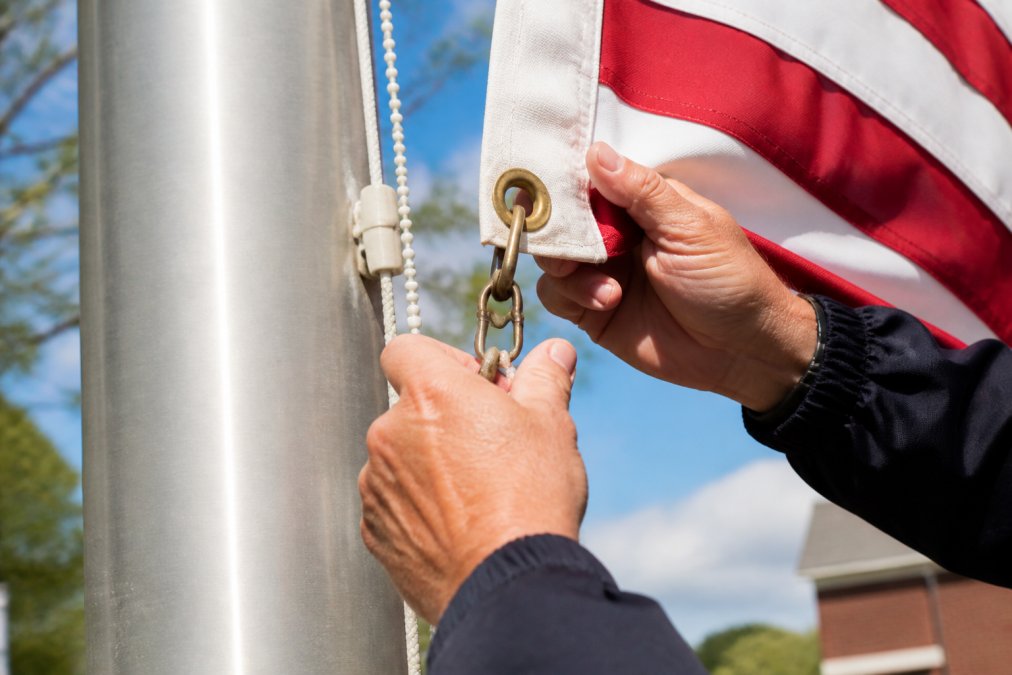
The wear items that require periodic replacement include halyards (the rope systems), snap hooks, and finials (the decorative caps on pole tops). Halyards typically require replacement every 18-24 months depending on usage frequency and environmental exposure. Snap hooks connecting flags to halyards wear faster in high-wind locations or where flags are changed frequently. Finials protect the pole top and should be inspected annually for corrosion or damage.
A practical maintenance schedule for municipalities includes:
- Monthly: Visual inspection from ground level for obvious damage, color fading, or fraying
- Quarterly: Close inspection of hardware, halyards, and snap hooks; cleaning flag fabric with mild soap and water if needed
- Annually: Professional inspection of pole mounting, bracket integrity, and halyard condition; replacement of worn halyards or hardware
- As-needed: Flag replacement when fabric shows significant fading, tears, or deterioration; pole maintenance for corrosion or structural concerns
Municipalities managing flags across multiple buildings should establish a centralized tracking system noting installation dates, material types, environmental exposure, and maintenance history. This approach prevents ad-hoc replacements and ensures consistent standards across all civic displays.
U.S. Flag Code Compliance for Municipal Displays
The U.S. Flag Code establishes protocols for displaying the American flag in public spaces. While the code doesn't carry criminal penalties for violations, municipalities should understand the guidelines that apply to official civic displays.
According to the U.S. Flag Code, the flag should never touch the ground, water, or floor. It should be displayed with respect, not inverted except as a distress signal. The flag should be illuminated when displayed at night, either by natural light or artificial lighting. When flags are no longer suitable for display, faded, torn, or deteriorated, they should be retired respectfully, typically through a flag retirement ceremony conducted by veterans organizations, scouts, or civic groups.
For municipalities flying multiple flags, positioning matters. The American flag takes precedence in placement. When flown with state flags, the American flag should be positioned at the same height or slightly higher. State flags are typically slightly smaller and positioned to the right of the American flag (from the viewer's perspective). This positioning applies to state facilities; federal facilities have stricter equal-size requirements.
The flag should not be used for advertising, decoration on clothing, or any purpose that diminishes its dignity. Municipalities should ensure that flag displays on government buildings follow these guidelines consistently. This isn't bureaucratic formality, it reflects the symbolic importance of the flag in civic identity and public perception.
Flag retirement ceremonies provide meaningful opportunities for communities to show respect for the flag while educating citizens about proper flag etiquette. Many municipalities coordinate with local veterans organizations, scouts, or civic groups to conduct these ceremonies, turning what could be a routine disposal into a community event that reinforces civic values.
Material Durability: Nylon, Polyester, and 2-Ply Options
Flag material selection directly impacts longevity, appearance, and maintenance requirements. Municipalities comparing options should understand the performance characteristics of nylon, standard polyester, and 2-ply polyester in outdoor conditions.
Nylon offers exceptional strength and tear resistance, making it the preferred choice for high-wind environments. Aniline-dyed nylon, where color is infused during fiber production rather than applied to the surface, delivers superior UV fade resistance and color retention. Nylon flags maintain vibrant colors through extended outdoor exposure. The material flies well even in light winds and resists water absorption, drying quickly after rain. For municipalities in coastal areas, high-wind regions, or locations with intense UV exposure, nylon represents the durability standard.
Standard polyester (often called Dacron) offers good durability at lower cost than nylon. Polyester flags are lighter than nylon, making them suitable for locations where lighter fabric is preferred. However, standard polyester is more prone to fading under UV exposure than aniline-dyed nylon. Polyester works well for protected installations or locations with moderate environmental stress. For municipalities managing tight budgets or displaying flags in sheltered locations, standard polyester provides adequate performance.
2-ply polyester represents a high-wind option that combines polyester's cost advantages with enhanced durability. This construction uses two layers of polyester bonded together, creating a heavier, stronger fabric than standard single-ply polyester. 2-ply polyester resists tearing in high-wind conditions and maintains structural integrity better than single-ply alternatives. For municipalities in areas prone to sustained winds, 2-ply polyester offers practical advantages, it's more durable than standard polyester while remaining more affordable than premium nylon options.
When comparing materials, municipalities should consider environmental conditions specific to their location. Coastal areas with salt spray benefit from nylon's superior corrosion resistance and UV stability. High-wind inland locations perform well with 2-ply polyester, which offers strength without the premium cost of nylon. Protected installations can use standard polyester effectively, reducing material costs while maintaining adequate durability.
The construction method matters as much as material selection. Sewn flags, where individual stripes are stitched together, outperform printed flags in durability. Sewn construction means colors won't separate or fade unevenly across the flag surface. For institutional displays representing municipal identity, sewn construction delivers the consistency and longevity that printed alternatives cannot match.
Conclusion
Municipalities selecting liberty flag alternatives face a straightforward choice: invest in durability upfront or manage constant replacement cycles that drain budgets and compromise civic appearance. Made in USA flags built with institutional-grade construction, aniline-dyed nylon, sewn stripes, reinforced stitching, and brass hardware, deliver the performance that commercial flagpole systems demand.
US Patriot Colors specializes in flags engineered for municipal and institutional use. Our flags use aniline-dyed nylon with sewn construction, four-row fly-edge stitching, and solid brass grommets designed to withstand years of continuous outdoor display. We offer custom flags in sizes from 3x5 feet to monumental 20x30 feet installations, accommodating everything from small municipal buildings to large civic centers. Our CAGE# registration enables direct government procurement, and every flag is made entirely in the USA.
Shop our made in USA flags and discover why municipalities across the country choose durability over compromise.
Frequently Asked Questions
Q: What makes a liberty flag alternative suitable for municipal use?
A: Municipal flag alternatives must meet U.S. Flag Code standards, withstand outdoor weather conditions, and maintain visual integrity over extended display periods. Made in USA flags constructed from durable nylon or 2-ply polyester offer superior longevity compared to imported options. The flag must attach securely to commercial-grade flagpoles using proper hardware like brass grommets or rope-and-thimble systems. Municipalities should prioritize flags with reinforced stitching, UV-fade resistance, and adequate wind ratings for their regional climate.
Q: How often should municipalities replace flags and halyards?
A: Flag replacement schedules depend on weather exposure and material quality. Halyards, snap hooks, and finials should be inspected quarterly and replaced annually or when visible fraying, corrosion, or wear appears. Coastal municipalities dealing with salt air should replace hardware more frequently. Establishing a regular maintenance and replacement schedule prevents flag degradation and ensures consistent civic display standards.
Q: What is the proper flag etiquette when schools fly state flags with the U.S. flag?
A: When a state flag flies alongside the federal American flag, the state flag should be slightly smaller and positioned below the U.S. flag. The equal-size requirement applies only to federal facilities; state facilities like schools have flexibility in sizing. Both flags should be mounted on separate poles or positioned at appropriate heights to show respect for the federal flag. This etiquette reflects the hierarchical relationship between state and federal authority while maintaining civic pride in both symbols.
Q: Why should municipalities choose made in USA flags over imported alternatives?
A: Made in USA flags offer superior durability, quality control, and compliance with government procurement standards. Domestic manufacturers use aniline-dyed nylon and polyester with higher tensile strength, better UV fade resistance, and reinforced stitching that extends flag life significantly. American-made options support local manufacturing and meet audit requirements for government agencies. They also provide faster production times, customization options, and accountability through CAGE numbers for federal purchasing. The initial investment typically yields lower total cost of ownership through reduced replacement frequency.