


Table of Contents
- Why Most Flags Fail in High Wind Areas
- Nylon vs Polyester Flags for Wind: Which Fabric Wins
- Construction Details That Determine Flag Longevity
- Wind Speed Thresholds and Flag Size Compatibility
- Best Flag Pole for High Wind Areas
- How to Prevent Flag Fraying in Windy Conditions
- Environmental Impact and Responsible Flag Disposal
- Conclusion
Last Updated: August 23, 2026
Most flags aren't built for wind. They're built to look good in a showroom. The moment they go up on a coastal pole, rooftop, or government building in a storm corridor, the flaws show fast: fraying edges, faded colors, blown-out grommets, and fabric that shreds within weeks. This guide breaks down exactly what separates a flag that survives sustained wind exposure from one that doesn't, covering materials, construction specs, flagpole compatibility, maintenance, and responsible disposal.
The best flags for high wind areas share three characteristics: they're made from heavy-duty 2-ply spun polyester, they have reinforced stitching at every stress point, and they're sized correctly for the flagpole and wind load they'll face. Get any one of those wrong, and you're replacing flags on a quarterly schedule.
Why Most Flags Fail in High Wind Areas
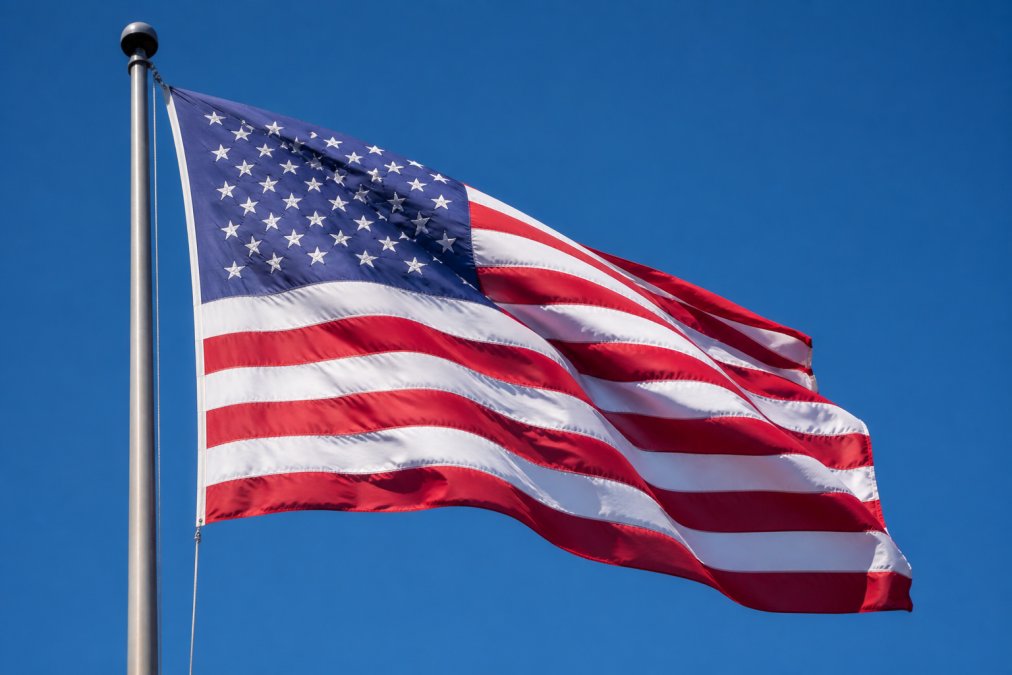
Standard single-ply flags use lightweight woven polyester or nylon with minimal finishing at the edges. Under continuous high-wind exposure, the fly end, the free edge opposite the header, experiences the most stress. The fabric flexes thousands of times per hour, and without adequate tear strength, edge fraying starts within weeks. Additional failure modes include grommet pull-through when flags are too large for their poles, and colorfastness failure under UV exposure when dyes aren't rated for 24/7/365 outdoor use.
Nylon vs Polyester Flags for Wind: Which Fabric Wins
For high-wind installations, 2-ply spun polyester outperforms nylon in almost every practical category.
Polyester's advantages in wind:
- Higher tensile strength per unit of fabric weight
- Superior UV resistance for outdoor durability
- Better colorfastness under continuous sun and weather exposure
- Stiffer weave that resists flapping-induced abrasion
Nylon's advantages:
- Lighter weight, which means it flies in lighter winds
- Faster drying after rain
The core issue with nylon in sustained high-wind environments is flapping resistance. Nylon's lighter weight becomes a liability when wind speeds climb, causing the flag to whip more aggressively and show edge fraying significantly faster than equivalent-quality polyester.
According to the Flag Manufacturers Association of America's material standards guidance, synthetic fibers for outdoor flags are evaluated on colorfastness, tear strength, and weather resistance, all areas where commercial-grade polyester consistently scores higher for demanding outdoor environments.
2-Ply Spun Polyester: The Commercial-Grade Standard
2-ply spun polyester is constructed from two layers of spun polyester yarn woven together, producing a heavier, denser material than single-ply alternatives. The "spun" designation matters: spun polyester uses short fiber lengths twisted into yarn, creating a softer, more textured surface that increases abrasion resistance at the edges, exactly where high-wind flags fail first. The two-ply construction adds material density without proportionally increasing weight, giving the flag better flapping resistance while maintaining enough flexibility to fly in moderate winds. Higher denier yarn means thicker individual fibers and a denser fabric weave, translating directly to better tear strength and longer service life under wind load.
When Nylon Still Makes Sense
For residential installations on protected properties, locations with average wind speeds under 12 mph, and any setting where the flag needs to fly in very light breezes, nylon's lighter weight is a genuine advantage. If your pole is in an open field, on a rooftop, near the coast, or in a region with regular storm systems, go polyester. If you're flying a flag in a sheltered backyard and want it to catch every light breeze, nylon is acceptable.
Construction Details That Determine Flag Longevity
Material choice gets most of the attention, but construction quality separates a flag that lasts two years from one that lasts six months, even when both are made from the same fabric.
Reinforced Stitching and Header Reinforcement
The header is the canvas or heavy-fabric strip along the hoist edge where the grommets are set. On a well-built flag, the header is made from heavier material than the flag body and attached with multiple rows of stitching.
What to look for:
- Double or triple lock-stitching along all four edges, not just the header
- Reinforced corner stitching at the fly corners, the highest-stress points
- Header width of at least 1.5 inches for flags 3x5 feet and larger
- Sewn stripes rather than printed stripes on American flags, which maintain color integrity under UV exposure far longer
The fly end hem deserves particular attention. A single-folded, single-stitched hem will fray in high-wind conditions. A properly finished fly end uses a double-fold hem with lock-stitching, giving the edge two layers of fabric and two stitch lines before exposure to wind stress.
Grommet Durability and Sewn vs Printed Stripes
Brass grommets are the standard for outdoor flags and resist corrosion in coastal and high-humidity environments far better than zinc or aluminum alternatives. For flags 4x6 feet and larger, a larger grommet diameter distributes the load across more header fabric, reducing pull-through risk. The grommet should be set with a reinforcing washer on the back side of the header.
On American flags, sewn stripes use separate fabric panels stitched together, meaning each stripe is a full layer of fabric. Printed stripes apply color to a single panel. Under UV exposure and repeated washing, printed colors fade faster. Embroidered stars hold their definition and color far longer than screen-printed stars on flags seeing daily outdoor exposure.
| Construction Feature | Minimum Standard | Commercial Grade |
|---|---|---|
| Header material | Single canvas strip | Double-reinforced canvas or polyester |
| Stitching | Single lock-stitch | Double/triple lock-stitch all edges |
| Fly hem | Single-fold | Double-fold with lock-stitch |
| Grommets | Zinc or aluminum | Solid brass with reinforcing washer |
| Stripes (US flags) | Printed | Sewn panels |
| Stars (US flags) | Screen-printed | Embroidered |
Wind Speed Thresholds and Flag Size Compatibility
Matching flag size to flagpole height and expected wind load is a step most buyers skip, and it's one of the primary reasons flags fail prematurely.
The general rule from the American Legion's flag display guidelines is that flag length should be approximately one-quarter to one-third of the flagpole height. A 20-foot pole should fly a 3x5 foot flag. A 30-foot pole handles a 4x6. A 40-foot pole is appropriate for a 5x8 or 6x10.
Wind speed thresholds by flag size (approximate guidance based on fabric and construction standards):
- 3x5 feet, 2-ply polyester: Rated for continuous exposure up to approximately 40-45 mph average wind speeds
- 4x6 feet, 2-ply polyester: Appropriate for poles in zones averaging up to 35-40 mph
- 5x8 feet and larger: Requires commercial-grade construction and evaluation against local wind-load data
For coastal installations and high-wind zones, size down one step from the maximum your pole can fly. A 30-foot pole rated for a 4x6 will perform better long-term with a 3x5 in sustained coastal wind.
Best Flag Pole for High Wind Areas
The best flag pole for high wind areas is a commercial-grade aluminum or fiberglass pole rated for the wind-load velocity of your installation site, with a revolving truck at the top to allow the flag to rotate freely rather than wrapping around the pole.
Pole material matters significantly in coastal climates. Steel poles corrode in salt air environments within a few years, even with powder coating. Aluminum and fiberglass offer better corrosion resistance for coastal and high-humidity sites.
The revolving truck, the pulley assembly at the top of the pole, directly affects flag longevity. When a flag can't rotate freely, it wraps around the pole during wind shifts, generating abrasion damage on the hoist edge and straining the grommets. A quality revolving truck lets the flag track with changing wind direction, reducing wrap events dramatically.
For government and commercial installations, the Architectural Aluminum Manufacturers Association's flagpole standards provides specifications for pole wall thickness, base embedment depth, and wind-load ratings that procurement teams can reference when evaluating suppliers.
Ground-set poles should be embedded to a depth of approximately 10% of the pole height plus one foot, set in concrete. A 20-foot pole requires roughly a 3-foot embedment. For sites with documented high wind exposure, increasing embedment depth by 20% above the standard calculation is a reasonable precaution.
How to Prevent Flag Fraying in Windy Conditions
Flag fraying is preventable, but it requires attention to both the flag itself and the installation environment.
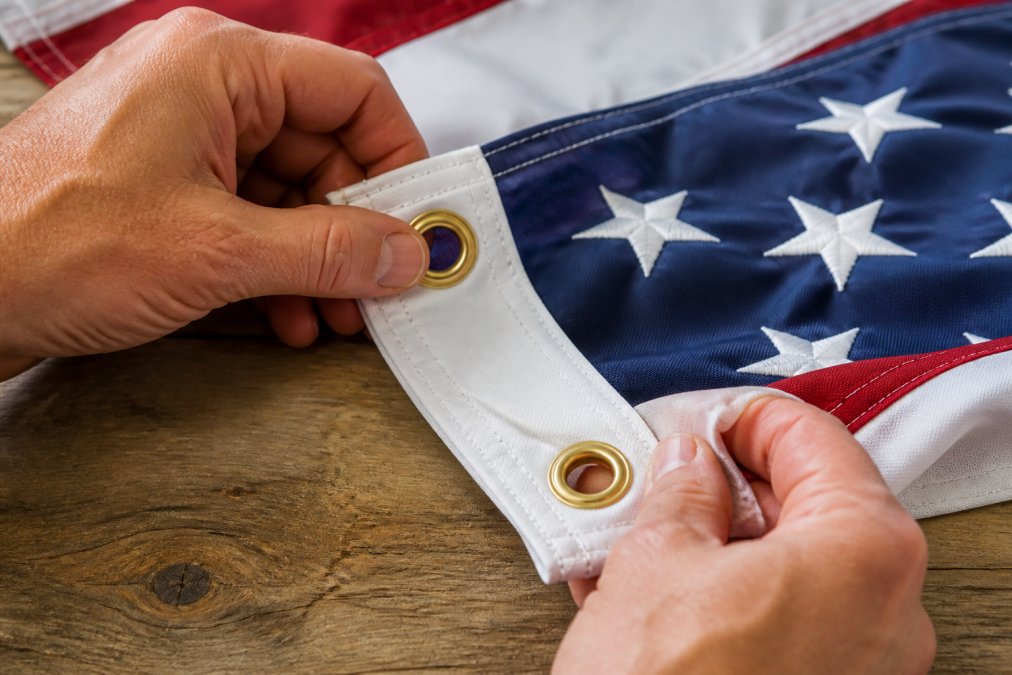
The single most effective prevention measure is correct sizing. A flag that's too large for its pole generates excessive flapping, the primary mechanical cause of edge fraying. Beyond sizing, inspect grommets monthly at high-wind installations for looseness or deformation, use quality snap hooks with swivel attachments to prevent twisting stress on the header, check halyard tension to prevent the flag from flapping against the pole, rotate flags seasonally to extend total service life, and bring flags in during severe weather when sustained winds exceed 50 mph.
Repair Techniques That Add Months of Life
A flag showing early fraying at the fly end doesn't need to be retired immediately. With the right repair approach, you can extend service life meaningfully.
Fly end fraying: Trim the frayed threads cleanly with sharp scissors, then apply a seam sealant rated for synthetic fabrics along the cut edge. For more significant fraying, a professional flag repair service can re-hem the fly end, restoring the double-fold hem and adding months of additional service life.
Grommet replacement: A deformed or cracked grommet can be replaced using a grommet setting tool and replacement brass grommets. If the header fabric around the grommet is also damaged, the header can be replaced before the damage extends into the flag body.
Seam separation: If a sewn stripe seam is beginning to separate, re-stitching it promptly prevents the separation from extending across the full stripe width.
Watch for signs indicating retirement rather than repair: tears through the flag body (not just the hem), color faded to the point of being unrecognizable, or header damage extending more than two inches into the flag body. At that point, repair costs exceed replacement value.
Environmental Impact and Responsible Flag Disposal
Flag disposal deserves direct attention, both because it's the right thing to do and because government and institutional buyers increasingly face questions about it from their own procurement policies.
The traditional method of retiring an American flag is ceremonial burning, as outlined in the United States Flag Code, Title 4 of the US Code. The Flag Code specifies that when a flag is no longer a fitting emblem for display, it should be destroyed in a dignified manner, preferably by burning. Many American Legion posts, VFW posts, and Boy Scout troops conduct formal flag retirement ceremonies and accept worn flags for this purpose.
For organizations managing large flag inventories, options beyond individual burning ceremonies include flag retirement programs through civic organizations, municipal collection points at government buildings or community centers, and manufacturer take-back programs. The environmental consideration with synthetic flags is that polyester and nylon don't biodegrade. Ceremonial burning is actually the more environmentally sound option for synthetic flags compared to landfill, since it reduces volume and doesn't contribute to long-term plastic accumulation.
Buying made-in-the-USA flags from suppliers like US Patriot Colors also reduces the environmental footprint associated with long-distance shipping and the lower quality control standards that lead to more frequent replacement cycles. A flag that lasts three years instead of six months means less total material consumed and disposed of over a five-year installation period.
Replacing flags every few months because they fade and shred in the wind is an avoidable cost. The solution is selecting the right fabric, construction, and size for your specific installation, then maintaining the installation correctly. US Patriot Colors produces exclusively made-in-the-USA flags built to commercial-grade standards, with 2-ply spun polyester construction, reinforced stitching, and brass grommets rated for demanding outdoor environments. We also hold a CAGE number for government procurement, which means federal and state agencies can order through established channels without additional vendor qualification steps. Shop Now at US Patriot Colors and get flags that are built to last.
Frequently Asked Questions
What type of flag is best for high winds?
2-ply spun polyester is the top choice for high wind areas. Its heavier material density and tight fabric weave give it superior tear strength and abrasion resistance compared to single-ply nylon or polyester. Flags built for 24/7/365 outdoor use should also have reinforced stitching along all edges, a reinforced header, and solid brass grommets. These construction details prevent edge fraying and header failure, which are the two most common ways high wind flags wear out prematurely.
Nylon vs. polyester flags: which is better for wind?
Polyester outperforms nylon in sustained high-wind conditions. Polyester has higher tensile strength and better UV resistance, so it holds up under continuous exposure to both wind and sun without fading or stretching. Nylon is lighter and dries faster, making it a reasonable choice for moderate-wind locations or areas with frequent rain. For coastal climates, high-wind zones, or commercial and government installations requiring 24/7 display, heavy-duty polyester is the more durable and cost-effective choice over time.
How windy is too windy for a flag?
Standard residential flags are generally rated for sustained winds up to around 35-40 mph. Commercial-grade 2-ply spun polyester flags can handle sustained winds above 50 mph, though prolonged exposure at those speeds accelerates wear on any fabric. At sustained winds exceeding 55-60 mph, most flag manufacturers recommend taking the flag down to prevent damage. Wind-load velocity also depends on flag size: a 5x8 ft flag creates significantly more drag than a 3x5 ft flag on the same pole, so matching flag size to pole rating matters.
How can I extend the life of my outdoor flag in windy conditions?
Start with a commercial-grade flag built from 2-ply spun polyester with reinforced stitching and a reinforced header. Inspect the fly end and edges monthly for early fraying and address small tears with whip stitching before they spread. Rotate between two flags so each gets rest time. In sustained winds above 50 mph or during storm warnings, take the flag down entirely. Clean the flag periodically to remove salt, grit, and pollutants that accelerate abrasion. Proper flagpole hardware, including a swivel snap hook, also reduces tangling and stress on the fabric.
This article was written using GrandRanker