




Table of Contents
- Why Schools Need Heavy Duty Flagpoles
- Commercial Flagpole Installation Requirements for Schools
- Aluminum vs. Fiberglass: Which Material Works Best
- Telescoping vs. Sectional Flagpole Designs
- Flag Etiquette for Schools: Displaying State and Federal Flags
- Replacement Flagpole Accessories and Maintenance
- Top Commercial Flagpole Options for Schools
- Conclusion
Last Updated: August 27, 2026
Why Schools Need Heavy Duty Flagpoles
Schools demand durable flagpoles that withstand constant weather exposure, wind stress, and year-round outdoor conditions. A heavy duty flagpole for schools ensures structural reliability, safety, and long-term cost savings. Most schools fly flags year-round, meaning poles endure salt air, UV radiation, temperature swings, and wind speeds that compromise residential-grade installations. When a flagpole fails, you face downtime, safety hazards, and emergency repair costs. A properly selected commercial flagpole eliminates these problems.
According to the American Society of Civil Engineers on structural wind loads, commercial flagpoles must withstand sustained wind speeds and gusts far exceeding residential specifications. Schools in coastal regions, plains states, or severe weather areas face especially demanding conditions. This guide covers what facility managers need to know when selecting and installing a commercial-grade flagpole system for educational institutions.
Commercial Flagpole Installation Requirements for Schools
Commercial installations require proper engineering, foundation work, and compliance with local building codes. Schools typically use wall-mounted flagpoles on building facades or ground-mounted poles in prominent outdoor spaces.
Ground Sleeve and Foundation Depth
A ground sleeve is the foundation anchor system that keeps your flagpole stable and prevents movement or settling. For commercial flagpoles serving schools, ground sleeve depth depends on pole height, wind load capacity, and soil conditions.
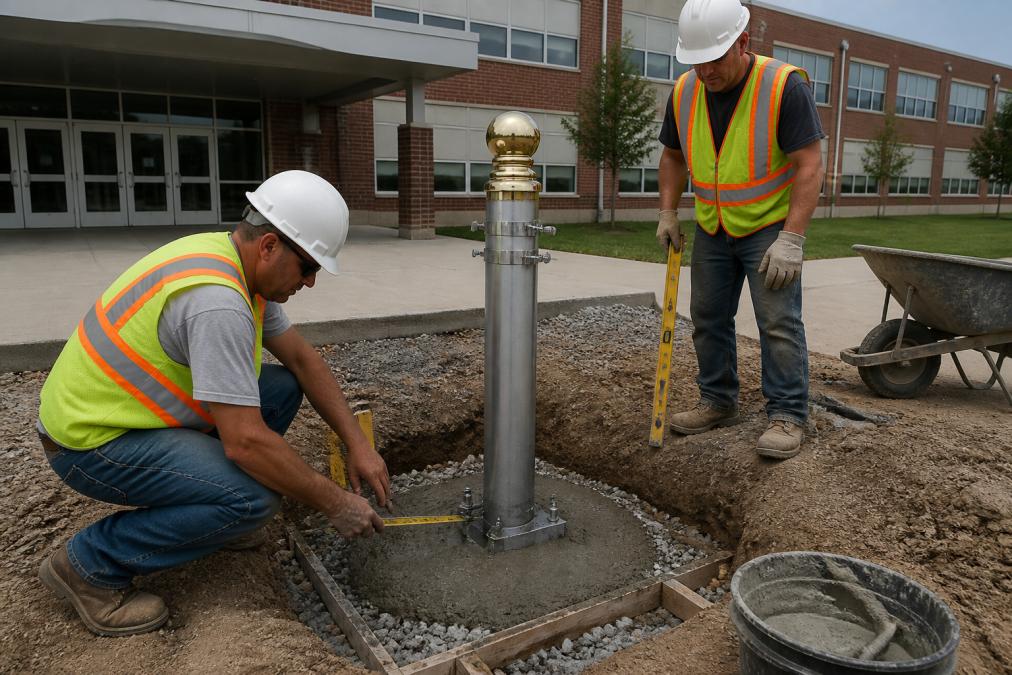
Most commercial installations require a ground sleeve buried 3 to 4 feet deep, with concrete footings extending another 12 to 18 inches below. This depth prevents frost heave in cold climates and ensures the pole won't shift during high winds. Facility managers should consult local building codes, as some jurisdictions specify minimum depths based on soil type and expected wind conditions.
The ground sleeve is typically a steel or aluminum tube that accepts the flagpole's base and remains permanent. When you need to replace the pole itself, the sleeve stays in place, saving time and cost on future upgrades.
Wind Speed Ratings and Structural Integrity
A heavy duty flagpole for schools should be rated for sustained winds of at least 75 mph, with capacity to handle gusts exceeding 100 mph in high-exposure areas. Structural integrity depends on wall thickness, material composition, and diameter. Heavy-duty aluminum poles typically feature 11-gauge aluminum construction (approximately 0.125 inches thick) or thicker, resisting deformation and extending lifespan significantly compared to residential alternatives (aluminum.org).
Commercial-grade aluminum poles rated for institutional use maintain structural integrity under extreme conditions. Schools in tornado-prone regions or coastal areas with salt spray should prioritize poles with the highest available wind speed ratings and corrosion-resistant finishes.
Aluminum vs. Fiberglass: Which Material Works Best
For schools, aluminum typically offers the better balance of durability, maintenance, cost, and environmental factors. Aluminum poles dominate institutional settings because they're lightweight, rust-resistant when anodized, and require minimal maintenance. An anodized finish creates a protective oxide layer that prevents corrosion even in harsh coastal environments. Aluminum is also fully recyclable, making it the more sustainable choice.
Fiberglass poles don't rust and require no painting, but they're more expensive upfront and less repairable if damaged. A cracked fiberglass pole often means complete replacement, whereas aluminum can be patched or refinished. For budget-conscious schools managing multiple buildings, aluminum's lower total cost of ownership makes it the practical choice. Aluminum also conducts heat more efficiently, reducing thermal stress in regions experiencing significant seasonal temperature variation.
Telescoping vs. Sectional Flagpole Designs
Telescoping flagpoles feature nested tubes that collapse for storage or lowering. Sectional flagpoles are assembled from multiple pieces bolted together and remain extended permanently.
For schools, sectional designs are typically preferred for ground-mounted installations. They offer superior wind speed ratings because there are no moving joints to weaken under stress. A sectional pole rated for 100+ mph winds provides the structural stability schools need in exposed locations. Telescoping poles work better for temporary displays or situations where you need to lower the flag for maintenance without climbing, but the internal mechanisms require periodic lubrication and inspection.
Commercial-grade sectional poles are the standard for permanent school installations because they eliminate mechanical complexity and deliver maximum structural integrity.
Flag Etiquette for Schools: Displaying State and Federal Flags
When flying the American flag alongside your state flag, specific etiquette rules apply. Schools should display both flags with equal respect, but positioning and sizing follow clear guidelines.
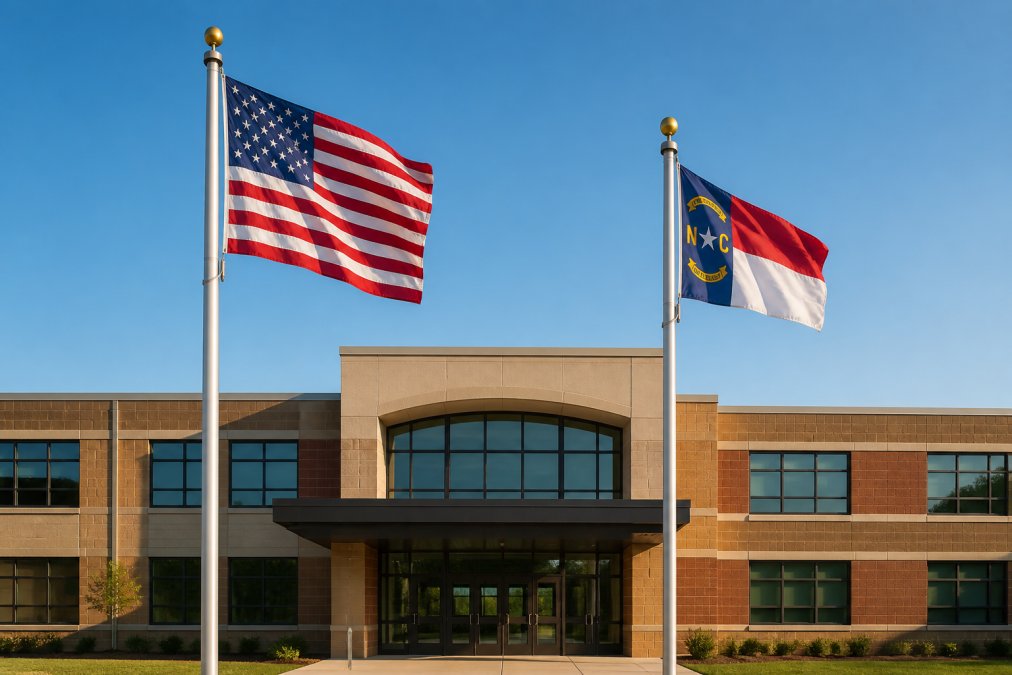
The American flag should be flown on the viewer's left when displayed with other flags. The state flag is positioned on the viewer's right and should be slightly smaller than the federal flag, roughly 10 to 15 percent smaller, visually subordinating the state flag without appearing disrespectful.
Many schools mistakenly believe that federal law requires state and federal flags to be exactly equal in size. This is incorrect. The strict equal-size requirement applies only to federal facilities and government buildings. Schools, as state institutions, follow different guidelines. The common belief that they must be equal size is wrong. Your state flag can and should be slightly smaller, making it clear which flag takes precedence.
When flags are flown on the same pole using a two-flag system, the federal flag is attached above the state flag. Both flags should be the same width (typically 3 feet for standard school installations), but the state flag's height is reduced to create the subordinate appearance. Schools should retire worn or damaged flags respectfully through local veterans organizations or Scout troops. If you need custom flags designed specifically for your school, Custom Flags are available to match your institution's colors and specifications.
Replacement Flagpole Accessories and Maintenance
Commercial flagpoles require periodic maintenance and occasional replacement of wear items. Understanding which components need regular attention helps schools budget for long-term upkeep.
Halyards, Snap Hooks, and Trucks
The halyard is the rope or cable that raises and lowers the flag. External halyards are exposed to weather and UV radiation, making them the most frequently replaced component. Most halyards last 2 to 3 years in heavy-use institutional settings before fraying or weakening (peer-reviewed research).
Snap hooks (also called swivel snaps) connect the flag to the halyard. These brass or stainless steel fasteners experience constant movement and wind stress. Quality snap hooks like US Patriot Colors' solid brass swivel snaps are designed for institutional use and cost under ten dollars to replace.

The truck is the pulley assembly at the pole's top that guides the halyard. A worn truck creates friction, making the flag difficult to raise or lower. The OT Series truck for external halyard poles is a cast aluminum replacement available in multiple sizes. Trucks typically last 5 to 10 years before needing replacement.

Schools should inspect halyards and snap hooks quarterly and replace them annually or whenever you notice fraying, corrosion, or difficulty operating the flag system. This preventive approach avoids emergency repairs.
Finials and Ornaments
The finial is the ornamental cap at the pole's top that protects the interior from water infiltration and weather damage. Finials experience constant UV exposure and temperature cycling, causing paint to fade and protective coatings to degrade. Replacing a finial every 5 to 7 years extends your pole's lifespan by preventing water damage.
US Patriot Colors offers plastic slip-fit acorns and cast aluminum flagpole caps for schools. These ornaments slip over the pole's top and are secured with stainless steel set screws. When ordering replacement finials, verify the spindle threading size (typically 1/2"-13NC for standard commercial poles).
Top Commercial Flagpole Options for Schools
For institutional settings like schools, commercial-grade flagpoles deliver the durability and wind speed ratings that residential poles cannot match.
US Patriot Colors Heavy Duty Aluminum Poles
US Patriot Colors specializes in commercial flagpoles designed for schools, government buildings, and municipalities. The 6 ft X 1 in Two Piece White Alum Heavy Duty Spinning Pole is engineered for institutional use with adjustable mounting rings and a gold ball ornament included. This pole is ideal for schools requiring a compact, wall-mounted installation on building facades.
For schools needing anti-furl rotating capability, the Aluminum Anti-Furl Rotating Poles are available in 5-foot and 6-foot lengths. These poles rotate on ball bearings, preventing flag tangling in variable winds. US Patriot Colors manufactures all poles exclusively in the USA, meeting government procurement standards. The company offers rush services for schools needing rapid deployment or emergency replacements.

Wall-Mounted Systems for School Buildings
Wall-mounted flagpoles are the standard for schools flying flags on building facades. These systems attach directly to masonry, brick, or siding and require no ground-level installation. Wall mounts are ideal for schools in urban settings or locations where ground space is limited.
Wall-mounted poles typically range from 4 to 8 feet in length and are rated for 75+ mph winds when properly installed. The mounting bracket must be secured to structural framing or masonry anchors rated for the pole's wind load capacity. The advantage is simplicity: no ground sleeve, no deep foundation work, and faster installation. Schools should explore our Wall Mount Flagpoles collection for options.
Ground-Mounted Sectional Poles for Prominent Displays
Ground-mounted sectional poles are the choice for schools wanting a dominant visual presence. These poles can reach 20, 25, or 30 feet tall, making your flag visible from blocks away. Sectional construction delivers superior wind speed ratings because there are no telescoping joints to weaken under stress.
A 20-foot sectional pole installed with proper ground sleeve and foundation can handle sustained winds exceeding 100 mph. Installation requires excavation, concrete work, and proper alignment, typically a 2 to 3 day process. Schools should hire contractors experienced with commercial flagpole systems. Explore our Commercial Flagpoles collection to find the right system for your facility.
Conclusion
Selecting a heavy duty flagpole for schools means prioritizing structural integrity, wind speed ratings, and maintenance simplicity. Commercial-grade aluminum poles with proper ground sleeve installation deliver the reliability schools need for year-round flag displays.
US Patriot Colors provides commercial flagpoles specifically engineered for institutional settings, with customization options and rush services available for schools needing rapid deployment. Our exclusively USA-manufactured poles meet government procurement standards and deliver the durability your school deserves. For custom flag orders or bulk procurement inquiries, contact our team today.
Frequently Asked Questions
What wind speed rating should a heavy duty flagpole for schools have?
Schools require flagpoles rated for sustained winds of at least 75 mph, with capacity for gusts exceeding 100 mph in high-exposure areas. Commercial-grade heavy duty aluminum poles with proper structural integrity can handle these conditions reliably. Wind speed ratings depend on pole diameter, wall thickness, and material composition. Consult your facility's local climate data and building codes to determine the appropriate rating for your location.
How deep should a school flagpole be installed in the ground?
Foundation depth depends on pole height and wind exposure. Most school flagpoles require the ground sleeve to be set 3-4 feet deep in concrete. For taller commercial poles (20-25 feet), foundation depth may reach 4-5 feet. Local building codes and soil conditions affect these requirements. Always follow commercial flagpole installation requirements specific to your region and consult structural engineers for larger installations.
What is the proper flag etiquette for displaying a state flag with the US flag at a school?
When flying the state flag alongside the US flag, the state flag should be slightly smaller and positioned below the federal flag. Unlike federal facilities, schools are not required to display flags of equal size. The US flag takes precedence in position and size. Check your state's specific guidelines, as some states have recommendations about proper positioning and sizing ratios.
How often should school flagpole halyards and snap hooks be replaced?
Inspect halyards and snap hooks quarterly for fraying, rust, or wear. Most installations need replacement halyards every 2-3 years depending on weather exposure and flag weight. Brass swivel snaps typically last 3-5 years before corrosion affects function. Salt air, intense UV, and high winds accelerate wear. Keep replacement flagpole accessories on hand and establish a maintenance schedule to prevent flag tangling and downtime.


