




Table of Contents
- What Flash Collars Do at the Flagpole Base
- Flagpole Diameter Measurement: Sizing a Collar Correctly
- Split Flash Collar vs. Standard: Which Fits Your Pole
- Flagpole Foundation Installation: Where the Collar Fits
- Spun vs. Cast Aluminum: Material and Finish Choices
- What Drives the Cost of Flash Collars
- Care, Fitment Issues, and When to Replace a Collar
- Conclusion
- Frequently Asked Questions
Last Updated: October 10, 2026
What Flash Collars Do at the Flagpole Base
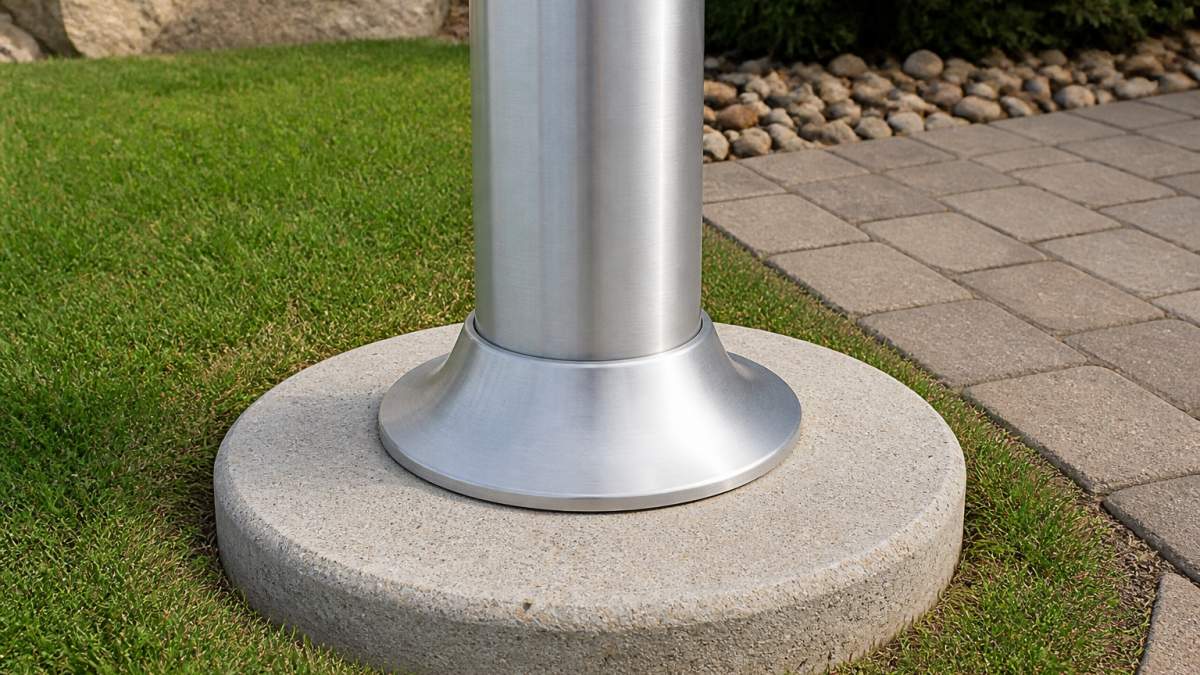
A flash collar is a decorative aluminum ring that conceals the concrete foundation and ground sleeve at the base of a flagpole, giving the installation a finished, professional appearance. It hides the raw concrete pad and exposed sleeve that would otherwise sit visible at ground level.
At US Patriot Colors, flagpole hardware is treated as part of the display, not an afterthought. A properly sized flash collar ties the pole to its setting, whether that setting is a government building, a school campus, or a front yard.
Most buyers first encounter flash collars when a pole is already standing and the base looks unfinished. Others are planning a new installation and want the base to look clean from day one. Both paths lead to the same questions: what size, what material, and how does it attach.
The short answer is that a collar does two jobs at once. It covers the foundation sleeve and concrete, and it adds a durable, weather-resistant finished edge at ground level.
Source: Eder Flag's aluminum flash collar product information.
Flagpole Diameter Measurement: Sizing a Collar Correctly
Flagpole diameter measurement is the single most important step before ordering, because a collar is sized to the pole it surrounds, not to the concrete pad beneath it. Measure the outside diameter of the pole at the point where the collar will sit, then match that figure to the collar's pole-fit size.
Most people cannot measure straight across a pole, so wrap a string or tape measure tightly around the bottom of the pole and divide that circumference by 3.1416 to get the diameter. Our guide on how to measure your flagpole diameter walks through each step.
Pole-Fit Size vs. Outside Coverage Diameter
Two different diameters matter, and confusing them is the fastest way to order the wrong part:
- Pole-fit size (inside diameter): the opening that slides over the pole. A collar labeled for a 4-inch pole is designed to fit that nominal pole diameter. Its actual opening includes clearance; confirm the manufacturer's dimensions.
- Outside coverage diameter (OD): the total width of the ring as it sits on the ground. This is always larger than the pole-fit size.
Shop by Pole Diameter
Match the pole's measured outside diameter to the collar below. Confirm the collar opening, outside coverage diameter, and height before checkout.
| Pole Diameter | Collar Product | Outside Coverage Diameter | Finishes |
|---|---|---|---|
| 4" | 4" Aluminum Flash Collar | 12" | Satin, Clear, Bronze, Black, White |
| 6" | 6" Aluminum Flash Collar | 12", 16" | Satin, Clear, Bronze, Black, White |
| 10" | 10" Aluminum Flash Collar | 22", 30", 38" | Satin, Clear, Bronze, Black, White |
| 12" | 12" Aluminum Flash Collar | 30", 38" | Satin, Clear, Bronze, Black, White |
Split Flash Collar vs. Standard: Which Fits Your Pole
For a new installation, slide the standard one-piece collar onto the pole before erecting it and temporarily secure it above the base according to the manufacturer's instructions. Lower it into its final position after the pole installation is complete. A split flash collar arrives in two halves with mounting tabs and screws, so it can be added or replaced on a pole that is already standing in its foundation sleeve.


Flagpole Foundation Installation: Where the Collar Fits
Follow the flagpole manufacturer's foundation and installation drawings. Embed the foundation sleeve in concrete and allow the concrete to cure as specified. Before erecting the pole, slide the one-piece collar onto it and temporarily secure the collar above the base. After the pole is set and secured in the sleeve and the specified base work is complete, lower the collar over the sleeve and adjacent concrete. A split collar can be fitted around an already installed pole.
Spun vs. Cast Aluminum: Material and Finish Choices
Flash collars are made in two constructions. Spun aluminum collars are formed from a flat aluminum disc over a rotating mandrel, and cast aluminum collars are formed in a mold. Commercial flagpole manufacturers, including Concord and Eder, list spun aluminum collars for commercial poles. Construction details vary by product and may not be stated on every listing. Check the specifications for your selected collar, or contact us to confirm its construction before ordering.
Anodized vs. Powder Coated Finishes
A finish color does not tell you the finish process. Bronze and black, for example, are offered as anodized finishes by some manufacturers and as powder coats by others. Our flash collars come in Satin, Clear, Bronze, Black, and White. Check the product specifications for the exact collar you are ordering, or contact us to confirm the finish process before you order.
Anodized finishes are integral to the aluminum surface rather than applied on top of it, so they resist chalking and fading well in normal exposure. Powder coated finishes offer broader color matching and a thicker film, but the coating can chip at edges and mounting tabs, which is where corrosion typically starts. Neither finish is automatically correct for a coastal site.
12" Aluminum Flash Collar for flagpoles →
Matching Finish to Pole and Setting
A collar that does not match the pole finish reads as an afterthought. Before ordering, confirm the pole's finish and the collar's finish are the same family, and confirm the outside coverage diameter is large enough to cover the exposed sleeve and concrete at the base. For split collars, confirm the finish is applied to both halves so the seam does not show a color mismatch.
Source: Eder Flag's 6-inch aluminum flash collar specifications, which list the outside diameter and finish options.
What Drives the Cost of Flash Collars
Cost comes down to five factors: dimensions, construction, finish, split configuration, and shipping. Larger pole sizes and larger outside coverage diameters cost more. The finish changes the price, and a split collar costs more than a standard one because of the two halves, mounting tabs, and hardware. Shipping reflects the size and weight of the ring.
| Cost Driver | What Changes the Price | Typical Impact |
|---|---|---|
| Dimensions | Larger pole-fit size and outside coverage diameter | Higher |
| Construction | Spun vs. cast aluminum | Varies by product |
| Finish | Satin, clear, bronze, black, white | Varies by finish |
| Split configuration | Two halves, tabs, and screws | Higher |
| Shipping | Size and weight of the ring | Varies |
Care, Fitment Issues, and When to Replace a Collar
Most flash collar problems are sizing or seating problems, not material failures. Working through them in order saves a return and a second install.
Routine Maintenance for Aluminum Collars
Wash the collar with mild soap and water, rinse, and dry. Avoid abrasive pads, steel wool, and harsh cleaners that dull or scratch the finish. Inspect the collar and its mounting hardware once or twice a year, and check the tabs and screws on split collars for tightness. In coastal or high-exposure settings, follow the manufacturer's finish specification and maintenance guidance for the exposure level at the site.
Troubleshooting Common Fitment Issues
| Symptom | Likely Cause | What to Check First |
|---|---|---|
| Collar will not seat over the foundation | Outside coverage diameter too small for the sleeve, or sleeve sits too high | Confirm collar OD against sleeve and concrete dimensions; check sleeve height against the installation drawing |
| Collar is loose on the pole | Pole-fit size wrong, or pole measured at the wrong point | Re-measure pole outside diameter at the point where the collar will sit |
| Split collar halves do not meet cleanly | Tabs not seated correctly under the ring | Loosen screws, reseat tabs, then draw halves together evenly |
| Collar sits high | Collar clearance or sleeve height issue | Check collar clearance and the installation drawing before adjusting anything |
| Finish is chalking or fading | Normal exposure, or maintenance interval too long | Clean per manufacturer guidance; confirm finish spec matches the site exposure |
If a collar sits high after installation, check collar clearance and the installation drawing before touching anything. The fix is almost always in the collar's seating or the sleeve height, not in the concrete. Never trim or refinish the foundation to force a collar down.
When to Replace a Collar
Replace a collar when it is cracked, badly corroded, or no longer sits flush after hardware is checked and tightened. A split collar makes that replacement possible without disturbing the pole, which is the main reason to keep the split option in mind even on a pole that was originally fitted with a standard collar. Split collars may require 2-3 weeks, so confirm availability before ordering if the replacement is time-sensitive.
Confirm Before You Order
Before checkout, confirm four figures: exact pole outside diameter, collar opening (pole-fit size), outside coverage diameter, and collar height. An oversized opening will not sit correctly against the pole, and an undersized outside coverage diameter will not hide the foundation sleeve and concrete.
Conclusion
The right flash collar starts with the pole, not the foundation. Measure the pole diameter at its base, choose the collar labeled for that nominal pole size, and pick an outside coverage diameter large enough to hide the sleeve and concrete. Use a standard collar on a new installation and a split collar on a pole that is already set. Before you order, confirm the dimensions and finish process on the product listing, and contact us if anything is unclear.
Frequently Asked Questions
What is the purpose of a flagpole flash collar?
A flash collar covers the concrete foundation sleeve and ground socket at the base of a flagpole, giving the installation a finished, professional look instead of exposed concrete. It also shields the top of the foundation from weather and debris. Standard collars slide over the pole before it is set; split versions let you add or replace one on an installed pole. Choose the size that matches your pole diameter and confirm the outside coverage diameter before ordering.
How do I measure for a flagpole flash collar?
Measure the outside diameter of the pole itself, not the foundation sleeve. That pole diameter determines the collar's pole-fit size. The stated size, such as 4-inch or 6-inch, refers to the pole it fits, while the outside coverage diameter is larger and determines how much of the foundation is hidden. Before ordering, confirm the exact pole diameter, collar opening, outside coverage diameter, and height.
Can I install a flash collar after the flagpole is set?
Yes, with a split flash collar. It arrives in two halves with mounting tabs and screws, so you can add or replace a collar without pulling the pole from its foundation sleeve. For a new installation, slide a standard one-piece collar onto the pole before erecting it, secure it temporarily above the base, and lower it after installation. Replacing a one-piece collar on an existing pole may require lowering the pole and removing obstructing hardware; follow the manufacturer's instructions. A split collar avoids removing the pole from its sleeve. Split collars may require 2-3 weeks lead time, so confirm availability before ordering, especially for larger sizes or specific finishes.
What should I do if my flash collar does not sit flush with the foundation?
Check the collar's internal clearance, opening, and outside coverage diameter against the manufacturer's installation drawing. An obstruction, incorrect collar dimensions, or an exposed sleeve higher than the collar can accommodate may prevent it from seating. Do not change the pole's embedment depth or trim the foundation to make the collar fit; consult the installer or manufacturer.


