



Table of Contents
- Quick Comparison: Best Made in USA Flags at a Glance
- How We Evaluated These Flags
- Nylon vs Polyester Flags: Which Material Fits Your Conditions
- FMAA Certified Flags: What the Label Actually Guarantees
-
Top Made in USA Flags: Reviews and Recommendations
- US Patriot Colors: Government-Grade Durability and Custom Options
- Annin Flagmakers Nyl-Glo: Residential Nylon with FMAA Certification
- Valley Forge Koralex II: Heavy-Duty Spun Polyester for High-Wind Sites
- Allegiance Flag Supply: Hand-Sewn Premium Craftsmanship
- FlagandBanner.com: Widest Selection Including Custom and Military Flags
- Liberty Flag and Specialty: Tangle-Free Poles and Repair Service
- Mounting Hardware and Flag Sizing Guide
- American Flag Care and Maintenance
- Which Flag Should You Buy? Decision Framework
Last Updated: August 22, 2026
The difference between a flag that lasts three months and one that lasts three years comes down to three things: where it was made, what it's made from, and how it was constructed. This guide from US Patriot Colors breaks down the best made in USA flags available today, so you can stop replacing flags every season and start buying once. Whether you're a procurement officer sourcing flags for government buildings or a homeowner who wants something that won't shred in the first windstorm, this is the buying guide you've been looking for.
Below, we evaluate six leading domestic manufacturers across construction quality, material performance, weather resistance, and value. We'll also cover the mounting hardware and care protocols that most buyers overlook until it's too late.
Quick Comparison: Best Made in USA Flags at a Glance
| Brand | Material | Best For | FMAA Certified | Key Differentiator |
|---|---|---|---|---|
| US Patriot Colors | Custom, all-weather | Government, commercial, military | Yes (CAGE#) | Custom-made, government-grade durability |
| Annin Nyl-Glo | SolarGuard nylon | Residential, light-moderate wind | Yes | Oldest manufacturer, fast-drying |
| Valley Forge Koralex II | 2-ply spun polyester | High-wind, harsh weather | Yes | Heavy-duty construction |
| Allegiance Flag Supply | Hand-sewn, USA-sourced | Premium residential | Sourced materials | Hand-sewn craftsmanship |
| FlagandBanner.com | Nylon, polyester, custom | Wide selection, custom orders | Yes (select) | Largest catalog, custom options |
| Liberty Flag & Specialty | Nylon | Humid regions, light wind | Yes | Free repair service (8'x12'+) |
Quick Picks:
- Best Overall (Government/Commercial): US Patriot Colors - government-grade construction with CAGE# documentation
- Best for High-Wind Sites: Valley Forge Koralex II - 2-ply spun polyester built for harsh conditions
- Best for Residential: Annin Nyl-Glo - proven nylon performance at a reasonable price point
- Best Premium Craftsmanship: Allegiance Flag Supply - hand-sewn with USA-sourced materials
How We Evaluated These Flags
Choosing among made in USA flags requires understanding what predicts long-term performance in the field.
Construction: Embroidered Stars, Sewn Stripes, and Reinforced Stitching
Embroidered stars are stitched directly into the canton fabric and won't crack, peel, or wash out like printed stars after UV exposure. Sewn stripes are individual fabric panels joined by stitching rather than printed on a single piece, holding color longer and resisting fraying. Reinforced stitching along the fly end signals a flag built to last.
The header, the canvas strip where grommets attach, should be heavy-duty and double-folded. Brass grommets are the standard for weather resistance; zinc or aluminum corrode faster, especially in coastal environments.
Weather Resistance, UV Protection, and Wind-Speed Ratings
UV protection is built into the fiber itself on quality flags, not applied as a surface coating. Open-weave construction allows wind to pass through rather than building pressure, extending flag life in high-wind locations.
Nylon flags perform well in light to moderate winds (up to 25-30 mph sustained). Spun polyester and 2-ply constructions handle higher sustained winds and suit exposed coastal or elevated sites. For sites regularly seeing gusts above 40 mph, specify heavy-duty commercial-grade flags with reinforced stitching and rope-and-thimble headers.
Flag etiquette and care guidelines from the American Legion
Nylon vs Polyester Flags: Which Material Fits Your Conditions
Nylon is the better choice for most residential applications. It's lightweight, flies in light breezes, and dries quickly after rain. The limitation is durability in sustained high winds: nylon fibers fray at the fly end faster than heavier materials.
Spun-woven polyester is correct for commercial, government, and high-wind residential sites. It's heavier and requires more wind to fly, but handles that wind far better. Tensile strength is meaningfully higher than standard nylon. For flagpoles exposed to 35+ mph winds regularly, polyester is the only sensible choice.
Two-ply spun polyester, as used in Valley Forge's Koralex II line, bonds two layers for additional durability, the heavy-duty end of the residential and commercial market.
| Condition | Recommended Material |
|---|---|
| Light to moderate wind, residential | Nylon (SolarGuard or equivalent) |
| High wind, exposed site | Spun polyester or 2-ply polyester |
| Coastal/salt air environment | Heavy-duty polyester, commercial grade |
| Indoor or ceremonial display | Nylon or cotton |
| Government/commercial installation | Commercial-grade polyester or custom spec |
FMAA Certified Flags: What the Label Actually Guarantees
FMAA certification verifies that a flag is 100% made in the USA using domestically sourced materials and domestic labor. The certification covers the entire supply chain: fabric, thread, grommets, and header canvas must all originate domestically.
This matters for two reasons. First, it's the only third-party verification of genuine domestic manufacturing. A flag can be assembled in the USA from imported fabric and still be legally labeled "Made in USA" under Federal Trade Commission guidelines. The FMAA standard is stricter. Second, for government procurement, FMAA certification and a supplier's CAGE number provide the documentation trail needed for compliance audits.
Top Made in USA Flags: Reviews and Recommendations
The flags below represent the strongest options currently available from domestic manufacturers, evaluated on construction, material quality, weather resistance, and real-world durability.
1. US Patriot Colors: Government-Grade Durability and Custom Options
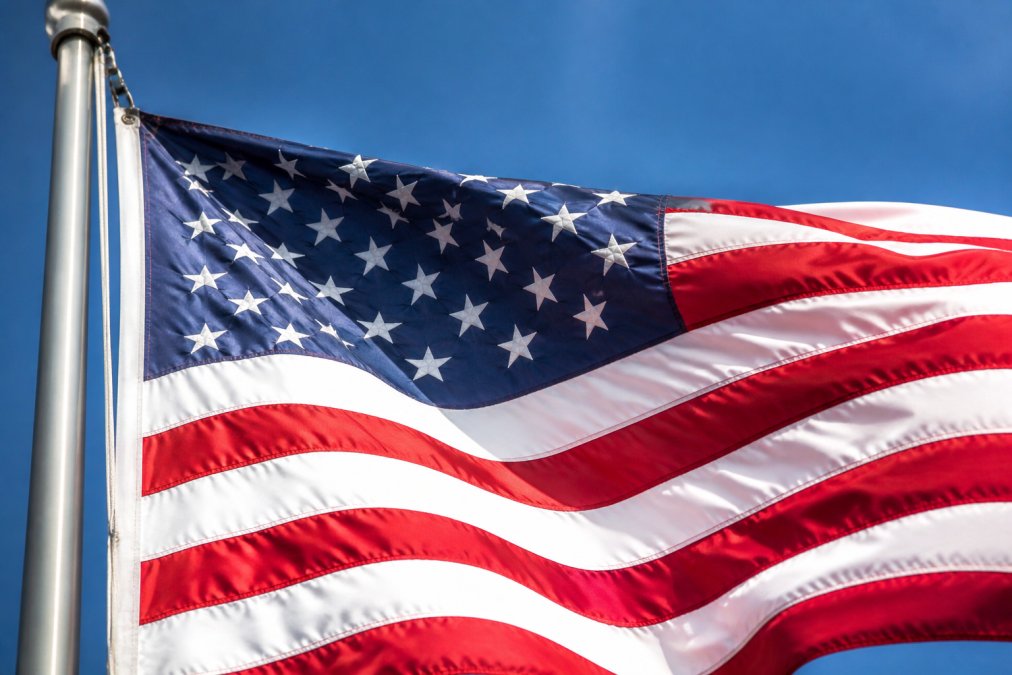
US Patriot Colors is our top pick for government agencies, municipalities, commercial facilities, and anyone needing a flag that performs under demanding conditions. It holds a CAGE number for government sales, allowing procurement teams to source directly through established federal channels without compliance headaches. The product line covers military branch flags, state flags, specialty banners, and custom-made flags, all manufactured exclusively in the USA.
Best for: Federal and state government agencies, municipalities, commercial facilities, military installations, bulk procurement.
Pros: Exclusively made in USA flags with verifiable documentation, CAGE number for direct government procurement, custom-made options, built for government and commercial durability standards.
The honest caveat: US Patriot Colors is built for institutional and commercial buyers. For a single 3x5 ft residential flag with no special requirements, other options may be more straightforward.
2. Annin Flagmakers Nyl-Glo: Residential Nylon with FMAA Certification
Annin Flagmakers is one of the oldest flag manufacturers in the country. The Nyl-Glo line's SolarGuard nylon is genuinely UV-protective and dries quickly after rain, making it practical for most homeowners. FMAA certification verifies the domestic sourcing claim. The flag flies well in light to moderate winds and holds color reliably in most climates.
Best for: Homeowners in areas with light to moderate wind and significant sun exposure.
Pros: Consistent build quality, fast-drying nylon, FMAA certified, widely available.
Cons: Nylon wears faster under sustained high winds. Some flagpole kits have plastic hardware components; buy the flag separately if hardware quality matters.
3. Valley Forge Koralex II: Heavy-Duty Spun Polyester for High-Wind Sites
The Koralex II is the right answer for high-wind and harsh-weather locations. Built from 2-ply spun polyester, it has meaningfully higher tensile strength than standard nylon or single-ply polyester. Embroidered stars and sewn stripes are standard; FMAA certification confirms all-domestic manufacturing. This is the flag for coastal installations, elevated commercial sites, or anywhere seeing sustained winds above 25 mph.
Best for: High-wind locations, coastal sites, commercial and government installations in exposed positions.
Pros: Highest durability in the residential/commercial market, embroidered stars, sewn stripes, FMAA certified.
Cons: Some flag kits have flimsy mounting hardware. Specify hardware separately for permanent installations.
4. Allegiance Flag Supply: Hand-Sewn Premium Craftsmanship
Allegiance Flag Supply occupies the premium residential market. Flags are hand-sewn by master seamstresses using USA-sourced, weather-resistant fabric with double-stitched seams throughout. Flagpoles include ball-bearing spinners to prevent tangling, a real-world maintenance issue most manufacturers ignore.
Best for: Homeowners prioritizing premium craftsmanship and USA-sourced materials.
Pros: Exceptional hand-sewn construction, double-stitched seams, tangle-prevention pole options.
Cons: Higher price point. Some customer feedback mentions mixed experiences with customer service responsiveness.
5. FlagandBanner.com: Widest Selection Including Custom and Military Flags
FlagandBanner.com is the right choice for custom sizes, military branch flags, state flags, or specialty banners. Their selection is the widest among domestic manufacturers, with custom work done in-house in the USA. FMAA certified options are available. Customer service is a genuine strength, with educational resources and expert support.
Best for: Buyers needing custom flags, military branch flags, or specific sizes unavailable elsewhere.
Pros: Largest domestic selection, custom capabilities, strong customer support.
Cons: Pricing on some items is higher. Navigating the full catalog requires effort.
6. Liberty Flag & Specialty: Tangle-Free Poles and Repair Service
Liberty Flag & Specialty's standout feature is complimentary repair service for flags 8'x12' or larger. For large commercial or government installations, that's meaningful value. Their flagpoles use rotating tops designed to prevent tangling, addressing a common maintenance complaint. The nylon flags are expertly sewn and embroidered, well-suited to humid regions with light to moderate wind.
Best for: Customers in humid regions with light to moderate winds who value ongoing repair support.
Pros: Free repair service for large flags, tangle-prevention poles, quality nylon construction.
Cons: Some negative reviews regarding flagpole delivery and customer service responsiveness.
Mounting Hardware and Flag Sizing Guide
Getting the flag right and mounting it incorrectly is a common failure point. Hardware quality and sizing decisions directly impact flag longevity.
Brass Grommets, Rope and Thimble, and Header Construction
Brass grommets are the standard for weather-resistant flag attachment, resisting corrosion in rain, humidity, and coastal salt air. Zinc or aluminum grommets corrode faster, especially in marine environments. Specify brass for any outdoor installation.
Rope and thimble construction is the alternative for larger flags and commercial installations. A rope sewn into the header with a metal thimble protecting the attachment point handles heavier flags and higher wind loads better than grommets alone, and it's standard for commercial-grade and government installations.
The header should be canvas or heavy-duty synthetic, double-folded and reinforced.
Choosing the Right Flag Size for Residential and Commercial Use
Flag sizing follows a general proportion rule: flag length should be roughly one-quarter to one-third of the flagpole height. A 20 ft residential pole typically flies a 3x5 ft flag. A 25 ft pole handles a 4x6 ft flag.
| Pole Height | Recommended Flag Size |
|---|---|
| 15-20 ft (residential) | 3x5 ft |
| 20-25 ft (residential/light commercial) | 4x6 ft |
| 25-40 ft (commercial) | 5x8 ft |
| 40-60 ft (commercial/government) | 6x10 ft |
| 60 ft+ (government/monumental) | 8x12 ft or larger |
Oversizing a flag for its pole is a common mistake. A flag that's too large generates excessive wind load, accelerates wear on both flag and pole hardware, and looks disproportionate. When in doubt, size down.
American Flag Care and Maintenance
Proper care extends flag life significantly, and most damage shortening flag lifespan is preventable with straightforward protocols.
Cleaning, Storage, and Extending Flag Life
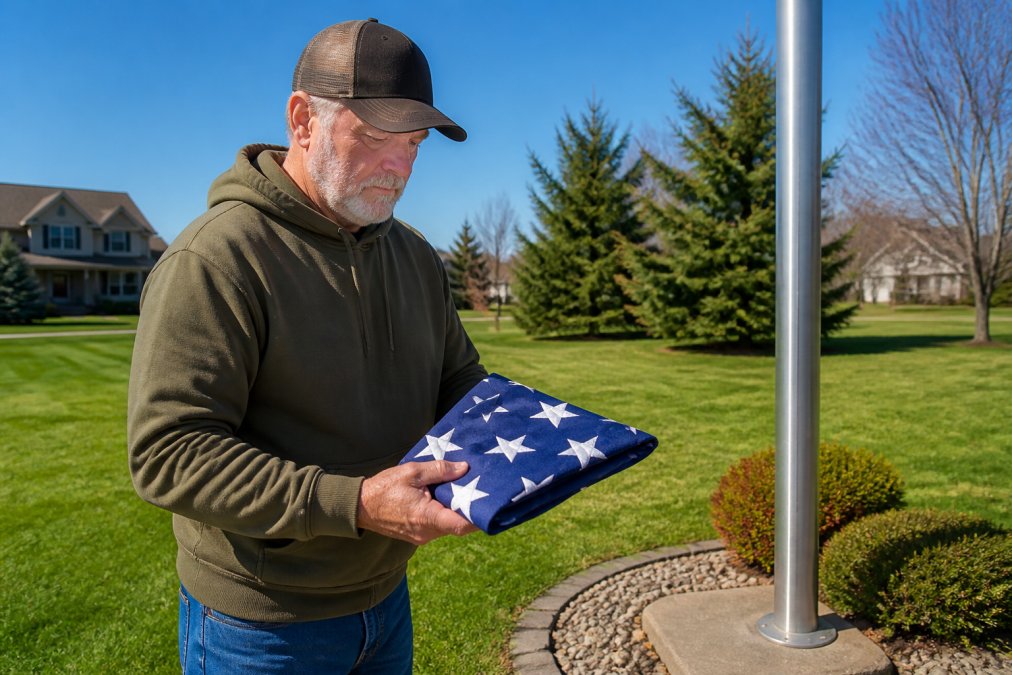
Most outdoor flags can be machine-washed on a gentle cycle with cold water and mild detergent. Avoid bleach, which degrades both nylon and polyester fibers and accelerates color loss. Air-dry flags completely before re-flying or storing them. Storing a damp flag causes mildew and weakens the fabric.
Inspect flags regularly for fraying at the fly end, the first place wear appears. During severe weather, including sustained high winds, heavy ice, or hurricane conditions, bring flags indoors. Rotating between two flags and allowing each to rest extends the life of both.
According to the United States Flag Code and display guidelines, the flag should not be displayed during inclement weather except when an all-weather flag is used.
Flag Retirement and Disposal Protocols
A worn or damaged flag should be retired with dignity. The VFW flag retirement guidelines and ceremony protocols specify that the preferred method is burning in a dignified ceremony. Many American Legion posts and VFW chapters hold periodic flag retirement ceremonies and accept worn flags for proper disposal.
Do not throw a worn flag in the trash. Synthetic flag materials (nylon and polyester) are petroleum-based and do not biodegrade. Proper retirement through an official ceremony is the correct disposal method.
Buying a higher-quality flag that lasts three to five years rather than replacing a lower-quality flag every season is the more sustainable approach, both economically and environmentally.
Which Flag Should You Buy? Decision Framework
The right flag depends on your specific conditions, not a universal ranking.
If you're a government agency or municipality: US Patriot Colors is the correct choice. The CAGE number, custom-made options, and government-grade durability standards are built for institutional procurement.
If your site has high winds or coastal exposure: Valley Forge Koralex II's 2-ply spun polyester construction is the appropriate specification. Pair it with brass grommets or rope-and-thimble mounting and a commercial-grade pole.
If you're a homeowner with standard residential conditions: Annin Nyl-Glo delivers proven nylon performance with FMAA certification at a residential price point.
If craftsmanship is the priority: Allegiance Flag Supply's hand-sewn construction is the premium residential option.
If you need custom or specialty flags: FlagandBanner.com's catalog depth and custom capabilities make it the right source for military branch flags, non-standard sizes, or specialty applications.
| Buyer Type | Top Pick | Key Reason |
|---|---|---|
| Government/municipal procurement | US Patriot Colors | CAGE#, custom-made, government-grade |
| High-wind/coastal commercial site | Valley Forge Koralex II | 2-ply spun polyester, tensile strength |
| Standard residential | Annin Nyl-Glo | Proven nylon, FMAA certified, accessible |
| Premium residential | Allegiance Flag Supply | Hand-sewn, USA-sourced materials |
| Custom/specialty needs | FlagandBanner.com | Widest selection, custom capabilities |
| Large flag with repair support | Liberty Flag & Specialty | Free repair service, tangle-free poles |
The common thread across every top choice: domestic manufacturing, verifiable sourcing, and construction details that match the installation conditions. A flag is a long-term investment when you buy correctly the first time.
Replacing flags every few months because they fade, shred, or weren't built for the conditions is an avoidable cost. US Patriot Colors offers exclusively made-in-the-USA flags with government-grade construction, custom-made options for non-standard applications, and a CAGE number that gives procurement teams the documentation they need for compliance audits. For government agencies, municipalities, and commercial facilities that need flags built to perform, that combination is hard to match. Shop US Patriot Colors and get flags that hold up to the conditions you're actually flying them in.
Frequently Asked Questions
How can you tell if an American flag is truly made in the USA?
Look for FMAA (Flag Manufacturers Association of America) certification, which verifies that both the materials and labor are 100% domestic. Certified flags carry a sewn-in label stating this. For government procurement, suppliers with a CAGE number can provide documentation your procurement team can audit. When in doubt, contact the manufacturer directly and ask for a certificate of domestic origin.
What is the difference between nylon and polyester flags for outdoor use?
Nylon flags are lighter, dry quickly, and fly well in light to moderate winds, making them a good fit for most residential settings and humid climates. Polyester, especially 2-ply spun-woven polyester, is heavier and built for high-wind and harsh-weather locations such as coastal or mountain sites. Polyester flags generally last longer under constant wind stress, while nylon offers more vivid color in calmer conditions.
What flag size should I use for my home or commercial building?
A standard residential flagpole of 20 feet typically pairs with a 3x5 ft flag. For a 25-foot pole, a 4x6 ft flag is appropriate. Commercial buildings and government facilities with 40-foot poles commonly fly 6x10 ft flags. The general rule is that flag length should be roughly one-quarter of the pole height. Always verify the pole's wind-load rating before sizing up, especially in exposed locations.
How do I properly retire or dispose of a worn American flag?
The U.S. Flag Code states that a worn or tattered flag should be destroyed in a dignified way, traditionally by burning. The American Legion, VFW posts, and many Boy Scout troops hold periodic flag retirement ceremonies and accept worn flags for proper disposal. Some municipalities also offer collection bins. Never place a flag in regular trash or recycling.
Are more expensive made-in-USA flags actually worth the higher cost?
For high-traffic or high-wind installations, yes. Domestically manufactured flags using FMAA-certified materials, embroidered stars, sewn stripes, and reinforced stitching last significantly longer than budget imports. Facilities managers who replace imported flags every few months often find that a commercial-grade domestic flag reduces total annual spend. For light residential use with infrequent display, a mid-range FMAA certified nylon flag offers solid value.
This article was written using GrandRanker


