




Table of Contents
- What Causes Flag Tangling
- Best Flag Material for High Wind
- Anti-Furling Hardware Solutions
- Adjusting Flag Tension and Slack
- Commercial Flagpole Accessories for Durability
- How Long Do Outdoor Flags Last
- Maintenance Tips for Flag Longevity
- Frequently Asked Questions
Last Updated: August 28, 2026
What Causes Flag Tangling
Flag tangling occurs when your flag wraps around the pole during wind shifts or calm periods. The problem isn't wind itself, it's what happens when wind weakens or changes direction. Your flag loses tension, sags, and the fabric spirals around the pole. Once wrapped, friction keeps it stuck until wind speed increases enough to unwrap it.
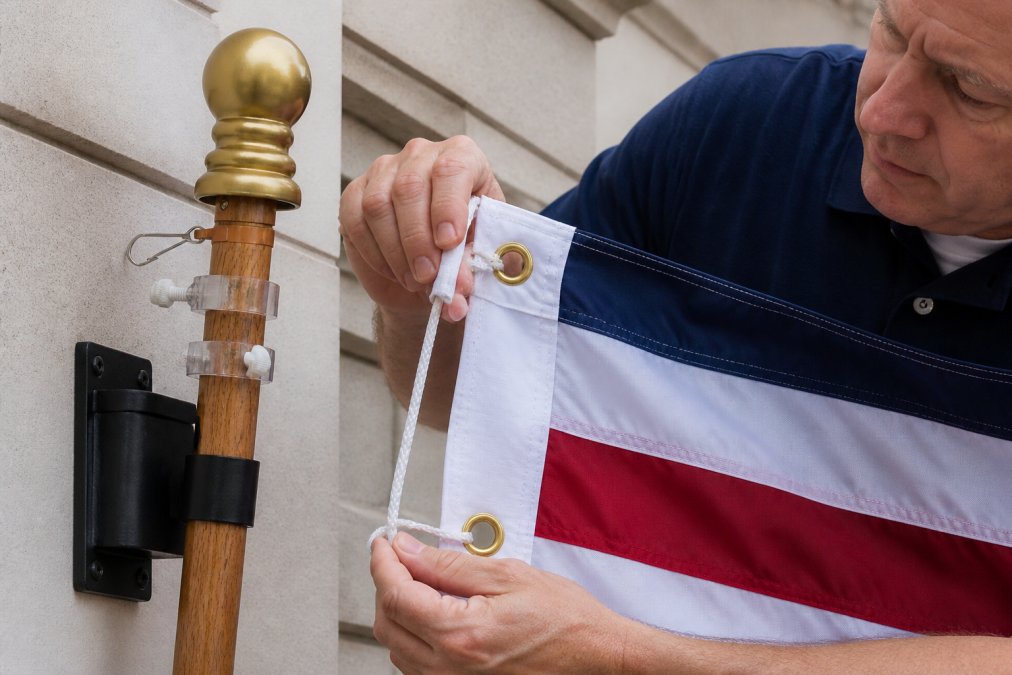
The root causes are straightforward: gravity pulls the flag down when wind slows, the flag's weight and pole's fixed position create a natural wrapping point, and traditional hardware doesn't account for rotational forces. Most flag owners don't realize the halyard (the rope holding your flag) plays a critical role. When halyards are too loose, the flag flops and tangles easily. When too tight, they restrict natural movement and stress the grommets. The sweet spot is tension that keeps the flag flying proudly without restricting rotation.
The right combination of hardware, material, and maintenance eliminates tangling almost entirely.
Best Flag Material for High Wind
The material your flag is made from determines how it behaves in wind and how long it lasts. For outdoor flags facing high wind, you have three proven options: nylon, standard polyester, and 2-ply polyester.
Nylon is lightweight and durable, moving freely in light to moderate wind, which means it's less prone to tangling. However, nylon fades faster than polyester when exposed to direct sunlight and deteriorates quickly in coastal environments with salt air.
Standard polyester (1-ply) is the middle ground. It resists fading better than nylon and costs less than 2-ply options. Standard polyester works well for moderate climates and average wind conditions, though it won't hold up as long as heavier-duty materials in extreme environments.
2-ply polyester is the high-wind champion. This double-layer construction provides superior strength and wind resistance. When your flagpole faces sustained gusts above 25 mph or lives in challenging conditions like coastal salt air, 2-ply polyester outperforms both nylon and standard polyester (peer-reviewed research). The material resists tangling better because its weight keeps tension on the flag even during wind fluctuations. One flag lasting three years beats replacing a cheaper flag every year.
For institutional settings like schools, hotels, and government buildings, 2-ply polyester paired with commercial flagpole hardware is the standard choice.
Anti-Furling Hardware Solutions
Anti-furling hardware solves the tangling problem by allowing your flag to move independently of the pole. Instead of wrapping around a stationary pole, the flag rotates freely. This is the most effective long-term solution for preventing flag tangling.
Rotating Flagpole Systems
A rotating flagpole system uses ball bearings at the pole's base or mid-section to allow the entire pole to spin. As wind direction changes, the pole rotates with it, keeping your flag positioned to catch the wind rather than wrap around the pole.
The US Patriot Colors Aluminum Anti-Furl Rotating Poles for Flags use anti-furl rotating pole joints with ball bearings that eliminate tangling by design. Available in 5-foot and 6-foot lengths with 1-inch diameter, these poles accept both grommet and pole hem/sleeve flags. The rotating mechanism handles wind shifts automatically, so your flag stays unfurled even during calm periods followed by sudden gusts.

Rotating poles work best for residential installations and smaller commercial setups. Once installed, you don't adjust anything, the ball bearing joint does the work. For government buildings, schools, and commercial facilities where appearance and reliability matter most, this investment pays off in reduced maintenance and consistent flag presentation.
Swivel Rings and Mounting Hardware
Swivel rings (also called rotating mounting rings or flag unfurlers) attach to the halyard and allow your flag to rotate independently of the pole. Unlike rotating poles, swivel rings work with standard fixed poles, making them a cost-effective retrofit solution for existing flagpoles.
The NeverFurl Complete Kits available from US Patriot Colors feature rotating mounting rings that eliminate flag tangling by allowing each rotator to work independently with the wind. Installation requires no additional tools; the rings attach directly to your existing halyard.

Swivel rings are ideal for institutional settings like schools and government buildings where replacing the entire pole isn't practical. They're also excellent for commercial flagpole accessories upgrades. The rings handle both grommet flags and pole hem/sleeve flags, making them versatile retrofit options. They require periodic inspection for wear, as the rotating mechanism experiences friction that can slow over time in salt air or harsh weather.
Flag Weights and Counterbalancing
Flag weights (also called flag counterweights or bottom weights) attach to the fly end (bottom) of your flag to maintain tension during calm winds. When wind slows, gravity pulls the flag down and it sags. Adding weight to the bottom keeps the flag extended and prevents it from wrapping around the pole.
Counterweights work by shifting the flag's center of gravity downward, creating natural tension that keeps the flag flying even when wind speed drops. For commercial flagpole installations, weights are standard practice at schools, hotels, and government buildings.
Weights alone don't solve tangling completely, they reduce it by maintaining tension but don't eliminate the rotational problem. Weights work best when combined with other solutions like swivel rings or rotating poles.
Adjusting Flag Tension and Slack
How tight you adjust your halyard dramatically affects tangling. Too much slack and your flag sags and wraps. Too much tension and you stress the grommets and halyard, causing premature wear. The proper halyard tension keeps your flag flying straight and slightly extended, even in calm wind.
To adjust tension correctly, start with your flag flying in light wind (8-12 mph). Tighten the halyard until the flag flies without sagging, then loosen it just slightly, about a quarter turn on your cleat or pulley. This gives the flag room to move without going slack. In calm conditions, your flag should hang with a gentle curve, not a tight line.
Seasonal adjustments matter too. Winter wind patterns differ from summer patterns. Retighten halyards in calmer seasons and loosen them slightly when stronger winds arrive. Check your halyard tension monthly, especially in the first few weeks after installation. New halyards stretch slightly as they settle; worn halyards lose their grip over time and need retightening.
Commercial Flagpole Accessories for Durability
For institutional settings like schools, hotels, embassies, and government buildings, commercial-grade accessories make the difference between flags lasting one season and lasting three or more. These are wear-and-tear components that need periodic replacement.
Halyards are the first wear item. Cotton halyards deteriorate fastest. Nylon halyards last longer but still need replacement every 2-3 years in harsh conditions. Check halyards quarterly and replace them when you see fraying or discoloration.
Snap hooks and clips connect your flag to the halyard. Stainless steel snap hooks resist corrosion better than galvanized options, especially in coastal environments. The Mount Clips for Flags and Pennants from US Patriot Colors feature stainless steel spring wire and nylon construction, designed for commercial use and multiple flag changes.
Finials (the decorative tops of your pole) are exposed to weather and wind stress. Aluminum finials resist rust better than steel. If your finial shows cracks or corrosion, replace it before it fails completely and allows water into the pole.
Replacement flags are inevitable. Even high-quality flags fade and fray after 2-3 years of continuous outdoor display. US Patriot Colors offers custom flag options that match your exact specifications, whether you need state flags, military branch flags, or specialty banners.
For schools flying the US flag alongside a state flag, remember that the state flag should be slightly smaller and positioned below the federal flag (archives.gov). This applies to state facilities; federal buildings follow stricter equal-size guidelines. Schools typically use wall mount flagpoles or commercial flagpoles to accommodate multiple flags properly.
How Long Do Outdoor Flags Last
Flag lifespan depends on material, climate, and maintenance. A well-maintained outdoor flag in moderate conditions lasts 2-3 years before significant fading or fraying requires replacement. In harsh conditions, expect 1-2 years. With superior materials and proper care, flags can last 3-5 years.
Nylon flags in moderate climates typically last 1-2 years before fading becomes noticeable. In intense sun or coastal salt air, expect 6-12 months before replacement.
Standard polyester flags last 2-3 years in moderate conditions. Polyester resists UV fading better than nylon. In harsh environments, expect 18-24 months.
2-ply polyester flags last 3-5 years in most conditions, even harsh ones. The double-layer construction resists both UV fading and physical wear.
Continuous tangling creates stress on grommets and the flag's header (the reinforced edge where grommets attach) and causes abrasion that leads to fraying. Preventing tangling actually extends flag lifespan by preventing the damage that causes premature failure.
Poor halyard maintenance accelerates wear too. Frayed halyards create friction that damages grommets. Loose halyards allow the flag to sag and tangle. Tight halyards stress grommets during wind gusts. Maintaining proper halyard tension and replacing worn halyards on schedule keeps your flag in service longer.
Maintenance Tips for Flag Longevity
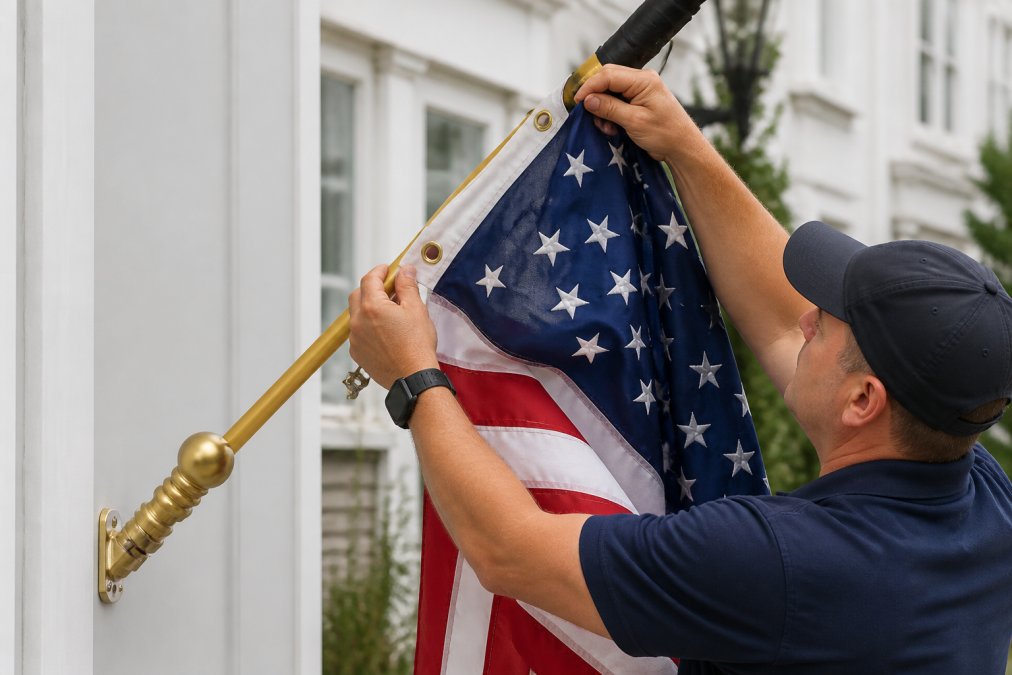
Regular maintenance extends flag life and prevents tangling problems from developing. A simple monthly inspection catches problems before they become expensive repairs.
Inspect grommets monthly. Look for cracks, corrosion, or separation from the flag fabric. If a grommet is loose, the flag will slip on the halyard and tangle more easily. Tighten any loose grommets or replace the flag if multiple grommets are damaged.
Check your halyard for fraying. Run your hand along the halyard to feel for rough spots or separation. Frayed halyards create friction that damages grommets and causes tangling. Replace the halyard immediately if you find fraying.
Clean your flag seasonally. Gently rinse your flag with fresh water from a hose. Use mild soap if needed, and rinse thoroughly. Never scrub aggressively or use harsh chemicals. Allow the flag to dry completely before retracting or storing it.
Retract flags during storms. If your weather forecast calls for sustained winds above 40 mph or severe storms, retract your flag. This simple step prevents the worst damage and extends flag life significantly.
Replace wear items on schedule. Halyards, snap hooks, and finials all have limited lifespans. Plan to replace halyards every 2-3 years, even if they look fine. Replace snap hooks when they show corrosion or stiffness. Replace finials if they crack or corrode.
Store flags properly during off-season. If you remove your flag seasonally, store it in a cool, dry place away from direct sunlight. Fold it neatly and store it in a breathable bag or container to prevent mildew.
For commercial flagpole installations at schools, hotels, and government buildings, US Patriot Colors provides custom flag options and replacement parts designed for heavy use. Wall mount flagpoles and commercial flagpoles handle this maintenance schedule reliably when paired with quality flags and hardware.

| Maintenance Task | Frequency | What to Check |
|---|---|---|
| Visual inspection | Monthly | Grommets, halyard fraying, flag sag |
| Halyard tension adjustment | Seasonal | Proper tension for current wind patterns |
| Halyard replacement | Every 2-3 years | Fraying, discoloration, stiffness |
| Flag cleaning | Annually | Dust, salt residue, mold growth |
| Snap hook/clip replacement | Every 3-5 years | Corrosion, stiffness, wear |
| Finial inspection | Annually | Cracks, corrosion, water entry |
| Flag replacement | Every 2-5 years | Fading, fraying, grommet damage |
Flag tangling is preventable. The combination of proper hardware, quality materials, and consistent maintenance eliminates the problem. Whether you're maintaining a residential flag or managing flags for a school, hotel, or government building, invest in anti-furling hardware like rotating poles or swivel rings, choose 2-ply polyester for harsh conditions, adjust halyard tension to the sweet spot, and replace wear items on schedule.
US Patriot Colors specializes in American-made flags and commercial flagpole accessories built for exactly these conditions. We're excellent at custom flags and offer rush services. Our rotating flagpole systems and swivel ring kits solve tangling by design. Our replacement halyards, snap hooks, and finials are engineered for durability. Shop our Aluminum Anti-Furl Rotating Poles, Commercial Flagpoles and Wall Mount Flagpoles collections, and accessories / replacement parts collections to get started.
Frequently Asked Questions
What is the best way to prevent flag tangling in high winds?
The most effective approach combines three elements: use an anti-furl rotating flagpole or swivel ring hardware, choose durable flag materials like 2-ply polyester, and maintain proper tension on the halyard. Rotating systems allow the entire pole or mounting hardware to spin freely with wind direction changes, preventing the flag from wrapping. For institutional settings like schools and government buildings, commercial flagpole accessories designed for high winds offer superior durability and reliability.
How long do outdoor flags last before they need replacement?
Quality outdoor flags typically last 2-3 years with proper maintenance, though this varies by material and environmental conditions. Flags exposed to intense UV, salt air, or constant high winds may require replacement annually. Made-in-the-USA flags constructed from heavy-duty nylon or 2-ply polyester generally outlast imported alternatives. Regular inspection of grommets, halyards, and the flag header helps identify wear early, extending display life and reducing replacement costs.
Do flag weights really work for preventing tangles?
Yes, flag weights help prevent tangling by adding stability and reducing excessive movement in moderate winds. They work best when combined with other solutions like swivel hardware or anti-furl rotating poles. Weights keep the fly end (trailing edge) properly extended, reducing the likelihood of the flag wrapping around the pole. However, weights alone are not sufficient in high-wind environments, they're most effective as part of a comprehensive anti-tangling strategy.
What commercial flagpole accessories prevent tangling most effectively?
The most effective commercial flagpole accessories include rotating swivel rings, anti-furl mounting rings, and counterweight systems. Swivel rings allow halyards to rotate independently of the pole, while anti-furl rings prevent the flag from wrapping entirely. For institutional installations at schools, government buildings, or commercial offices, these accessories are essential wear items that require periodic replacement. Pairing quality accessories with proper halyard tension and regular maintenance ensures tangle-free flag displays year-round.


