




Last updated: November 24, 2026
Choosing a flagpole for a coastal property means looking beyond the shaft material. Salt exposure, protective finishes, metal fittings, wind conditions, and the flag you intend to fly all belong in the same decision. For facilities teams, schools, municipal properties, and waterfront businesses, the goal is a pole that suits both the site and the maintenance the staff can provide.
The short answer
Anodized aluminum and fiberglass are useful starting points for a coastal flagpole comparison. Aluminum combines a rigid shaft with a corrosion-resistant finish, while a fiberglass shaft will not rust. Neither eliminates the need to inspect metal fittings. Carbon steel requires a protective system suited to the exposure.
Choose by the exact model, not the material label alone. Compare its finish, hardware, permitted flag size, wind rating, and installation requirements together.
Coastal Flagpole Materials at a Glance
| Material | Why consider it? | What to check |
|---|---|---|
| Aluminum | Relatively lightweight, rigid shaft | Available anodized finish, chloride-related pitting, and model-specific wind rating |
| Fiberglass | A shaft that does not rust | Outdoor finish, metal fittings, and model-specific wind rating |
| Carbon steel | Strength and stiffness | Specified protective system, joint protection, and coating-repair requirements |
Aluminum, Fiberglass, and Steel: A Closer Look
Aluminum flagpoles
Aluminum forms a natural oxide layer, but chloride exposure can still cause pitting. The commercial flagpole buying guide describes anodized finishes for coastal exposure and lists powder coating as a separate option. Ask which finish is available for the exact pole you are considering rather than assuming every aluminum pole has the same protection.
For a product-specific starting point, review the shaft, finish, and wind-rating information in the Architectural Series commercial aluminum flagpole specifications.
Fiberglass flagpoles
A fiberglass shaft does not rust, but its metal fittings can still corrode. Check the exterior finish for outdoor exposure and review the manufacturer's wind ratings with and without a flag. The fiberglass flagpole installation and care instructions describe cleaning with soap and water and avoiding abrasives. Follow the instructions for the specific model you purchase.
Steel flagpoles
Carbon steel needs a protective system suited to the exposure, such as hot-dip galvanizing, a protective coating, or a specified combination. Ask how joints and exposed edges are protected and how damaged finishes should be repaired.
Stainless steel is a separate category, not a guarantee against coastal corrosion. Its grade, finish, exposure, and maintenance requirements matter. Salt deposits can still contribute to staining or pitting.
Where Corrosion Starts
Salt deposits, moisture, damaged finishes, and joints deserve particular attention. Inspect scratches, exposed edges, fasteners, and the base, and keep the manufacturer's drainage paths clear.
Galvanic corrosion can occur when dissimilar metals are in electrical contact and a conductive liquid, such as salt water, wets the joint. The more active metal can corrode preferentially. The metals involved, their exposed surface areas, and electrical isolation all affect the risk, as explained in this technical guide to galvanic corrosion.
Use the manufacturer's specified fasteners and fittings. Where isolation between metals is required, use the approved washers, sleeves, or other specified parts. Do not substitute hardware based only on a label such as “stainless.”
Identify replacement parts before ordering
Check the pole model and the dimensions required for each part. A flash collar surrounds the base of the shaft; a finial or replacement truck has different mounting requirements. The truck is the pulley assembly at the top of the pole. Our Commercial Flagpole Parts & Maintenance Guide helps identify where these components fit.
Match the Pole and Flag to the Site
Corrosion resistance and wind performance are separate considerations. A material's flexibility, weight, or stiffness does not establish a safe wind rating by itself.
Compare the manufacturer's flagged and unflagged ratings for the exact model. A flagged rating applies under the manufacturer's stated flag-size and installation conditions. Specify the largest flag you intend to fly while selecting the pole, not after it has been ordered.
The shaft, foundation, soil, and site exposure all affect installed performance. Have the installer or project engineer confirm that the foundation and installation details suit the location. An open waterfront property can present different conditions from a more sheltered site.
Before ordering, confirm the applicable flagged rating, maximum permitted flag size, and the manufacturer's instructions for lowering the flag in high winds.
Coastal Flagpole Maintenance
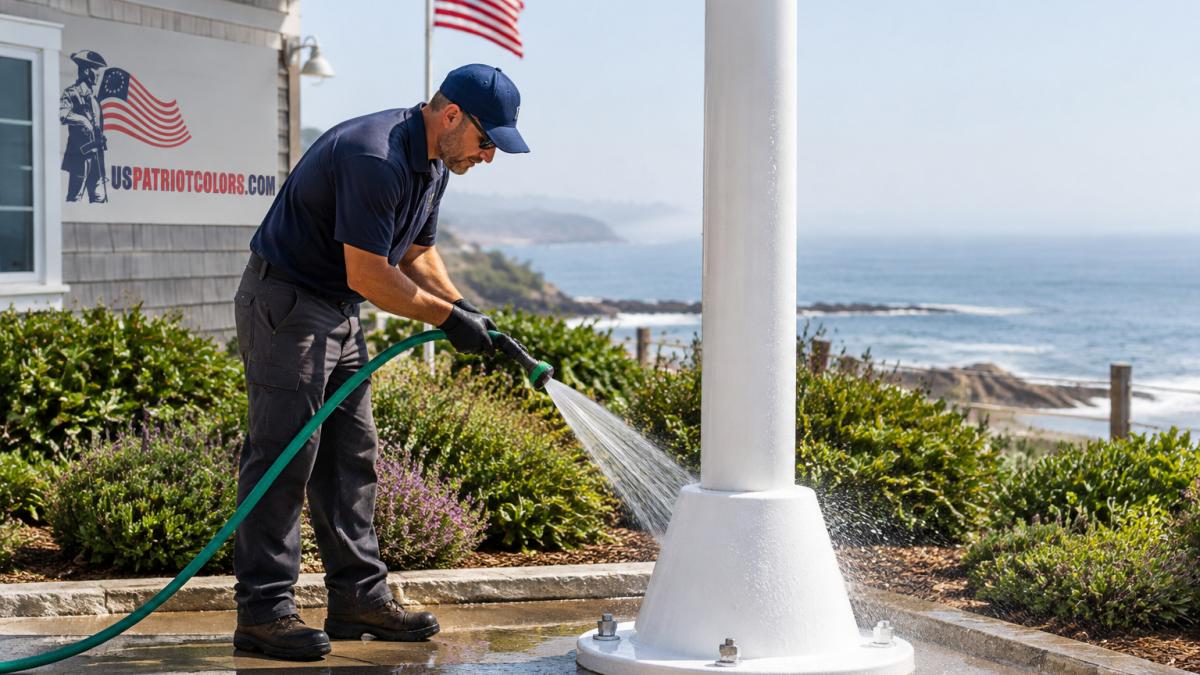
Follow the cleaning and inspection instructions for the pole's finish and hardware. Where the manufacturer permits it, rinse salt deposits from accessible surfaces with fresh water. Avoid abrasive cleaning methods unless specifically approved.
Inspect for pitting, coating damage, loose fasteners, frayed halyard, binding pulleys, and damaged clips. Arrange a qualified inspection if the pole leans, a structural connection is loose, or corrosion appears substantial. For properties with several poles, keep a record of inspections and repairs.
Before You Request a Coastal Flagpole Quote
Gather these details so the proposed pole and flag can be evaluated together:
- Installation location and whether the site is open waterfront or more sheltered.
- Intended pole height and largest flag size, including any plan to fly more than one flag.
- Available shaft finishes and the specified hardware package.
- The applicable flagged wind rating and installation requirements.
- Foundation, soil, drainage, and installer or engineering requirements.
- Cleaning access, inspection needs, current pricing, and freight.
Use our flagpole and kit guide to explore options. When planning the display, include the intended American flag or custom flag dimensions in the pole selection.
Planning a Coastal Flagpole Project?
For a business, school, municipal property, or military facility, send us your installation location, intended pole height, largest flag size, and a brief description of the coastal exposure. We can help you compare options and identify the specifications to confirm with your installer.
Email your project details · Call 800.454.6998 · Text 727-250-5102
Frequently Asked Questions
Which flagpole material is least likely to corrode in salt air?
A fiberglass shaft will not rust, while anodized aluminum offers a corrosion-resistant finish. Both still require attention to fittings and maintenance. Compare the complete pole assembly and its suitability for your site rather than choosing by shaft material alone.
Is aluminum or fiberglass better near the coast?
There is no single answer for every site. Compare anodized aluminum and fiberglass models using your intended pole height, flag size, coastal exposure, maintenance access, and the manufacturer's installation and wind-rating requirements.
Does stainless steel resist salt air?
Stainless steel is not immune to coastal staining or pitting. Its grade, finish, exposure, and maintenance matter. When dissimilar metals meet in a wet, salty joint, galvanic corrosion can affect the more active metal. Use the pole manufacturer's specified fittings and any required isolation components.
How should you maintain a coastal flagpole?
Follow the instructions for the pole's finish and hardware. Rinse accessible surfaces with fresh water when permitted, inspect for corrosion or coating damage, and check the halyard and fittings for wear or looseness. Have structural concerns assessed by a qualified professional.
What matters most for a flagpole in high winds?
Use the exact model's flagged wind rating under the manufacturer's stated conditions. Confirm the intended flag size, foundation, installation details, and site exposure together. Material alone does not establish a wind rating.


