




How to Properly Display Multiple Flags on One Pole
November 11, 2026
Table of Contents
- Understanding Flag Precedence and U.S. Flag Placement
- The Correct Order of Flags on One Flagpole
- Displaying the U.S. Flag and State Flag on One Pole
- How Far Apart Should Flags Be on a Flagpole
- Flagpole Multiple Flag Attachments: Hardware and Installation
- Sizing Flags for Single-Pole Display
- Maintaining Multiple Flags on One Pole
- Frequently Asked Questions
Last Updated: October 15, 2026
Understanding Flag Precedence and U.S. Flag Placement
Understanding how to properly display multiple flags on one pole starts with flag precedence as the foundation.
Flag etiquette comes from tradition and respect, not federal law. The Flag Code provides guidance but carries no penalties, yet proper protocol matters to government agencies, military families, and institutions that display flags daily.
The position of honor depends on the arrangement. Stacked vertically, the U.S. flag goes on top. Side by side, it occupies the center or the flag's own right, the flag's perspective counts, not the viewer's.
The Correct Order of Flags on One Flagpole
The correct order of flags on one flagpole depends on the combination. With a state flag, the U.S. flag takes the top position and the state flag hangs below it, reflecting the hierarchy of nation before state.
The same rule applies with organizational, military, or commemorative flags: the U.S. flag occupies the highest position, and other flags follow in order of significance.
For how to properly display multiple flags on one pole, sequence matters when flags share a single halyard or clip system.
When three or more flags fly together, establish a clear ranking: federal flags outrank state flags, which outrank local or organizational flags.
Displaying the U.S. Flag and State Flag on One Pole
Displaying the U.S. flag and a state flag on one pole is common but often misunderstood. The visual rule is simple: the U.S. flag flies above the state flag. People assume a single federal law governs every combination, it does not.
What the Flag Code actually says
The U.S. Flag Code (4 U.S.C. §§ 5-10) is the reference most people mean by "flag law." It is a set of guidelines, not a criminal statute, and carries no penalties for private displays. For a multi-flag pole, it describes the position of honor: the U.S. flag occupies the top when stacked, and the center or the flag's own right when grouped.
The Flag Code does not dictate how a state, city, school district, or private organization must display its own flag alongside the U.S. flag; those rules, where they exist, come from the state or institution.
Where the rules actually come from
Sort your display into one of four buckets before ordering hardware:
- Federal facilities and the U.S. military. Follow the Flag Code plus branch-specific customs; on a single pole the U.S. flag is at the top, and service flags follow service precedence.
- State government buildings. Many states publish their own guidance on how the state flag is positioned relative to the U.S. flag on shared poles. Check state administrative rules or the facility's protocol office.
- Local government, schools, and civic organizations. These usually adopt the Flag Code as a baseline plus their own policy governing order, size, and half-staff procedures.
- Private displays at homes and businesses. The Flag Code is the customary reference; there is no enforcement mechanism, but following customary order makes the display read as respectful.
The one rule that does not change
Across all four buckets, the U.S. flag holds the position of honor. On a single pole with a state flag, the U.S. flag is on top and the state flag hangs below, whether they share one halyard or ride on separate clips.
A common mistake is assuming the state flag must equal the U.S. flag in size. Equal-size guidance in the Flag Code applies to flags of different nations displayed together, not to a federal flag paired with a state flag.
Practical setup for a U.S. and state flag on one pole
- Put the U.S. flag on the top clip or top position of the halyard.
- Put the state flag directly below, with enough separation that the flags do not overlap when the wind drops.
- Use independent clips or swivels so each flag rotates on its own; a shared fixed attachment point lets a wind shift push one flag across the other.
- Check the display from the primary viewing angle, not just from under the pole, a sagging halyard or wrapped flag can invert the visual order even when hardware is correct.
If your facility also flies a city, county, or organizational flag, the same logic extends: U.S. flag on top, then state, then local or organizational. Authority for the lower flags comes from the entity that owns them, not the Flag Code.
How Far Apart Should Flags Be on a Flagpole
How far apart should flags be on a flagpole? There is no federal spacing requirement, and no single number works for every pole. The right spacing lets each flag fly independently without overlapping the flag below or wrapping the pole in ordinary wind, a function of flag height, pole hardware, and wind exposure.
Start with flag height, not flag width
Spacing is driven by the flag's height along the pole, not its fly length. A 3×5 ft flag is 3 ft tall on the hoist; a 4×6 ft flag is 4 ft tall.
A practical starting point:
- 2×3 ft flags: 18-24 in between attachment points
- 3×5 ft flags: 24-36 in between attachment points
- 4×6 ft flags: 36-48 in between attachment points
- 5×8 ft flags and larger: 48 in or more, and consider whether a single pole is the right choice at all
These are starting points, not code. Adjust up if flags overlap or tangle in normal wind; adjust down only if the display still reads clearly and the flags never touch.
Tie spacing to your actual pole hardware
Nominal pole size, actual collar opening, and outside coverage diameter are three different measurements. A pole sold as a "20 ft, 3 in butt" has a nominal size that does not tell you the actual outside diameter at the top, where clips sit. Measure the pole at the height where you plan to attach hardware.
- Collar or ring opening: the inside diameter the halyard passes through, setting minimum clearance for clips and swivels.
- Outside diameter at the attachment point: what the clip actually clamps onto; a clip sized for a 2 in pole will not seat correctly on a 1.5 in section.
- Height of the attachment point: the higher the clip, the more leverage wind has, and the more separation you want between flags.
With a tandem clip system, spacing is set by clip positions on the halyard, so measure and mark before tightening anything. With a single halyard and two flags tied in series, spacing is set by the halyard length between attachments, leaving less ability to fine-tune later.
Adjust for wind exposure
Wind turns a correct-looking display into a tangled one. Two flags on one pole move at different rates because of different mass, fabric, and attachment geometry, producing wrapping, snapping, and uneven wear.
- Sheltered locations (courtyards, tree-lined streets, low-wind inland sites): the lower end of the ranges above usually works.
- Open or coastal locations (shorelines, hilltops, open plains): add 6-12 in to the gap and use swivels on every flag so each rotates independently.
- High-wind seasons: plan spacing for the windy season, not the calm months.
A quick sizing check before you drill
Before marking clip positions, run this check:
- Measure the height of the tallest flag you plan to fly.
- Measure the height of the shortest flag.
- Add the two heights together.
- Add a working margin of at least 6 in.
- Compare that total to the usable pole height above the cleat or winch.
If the total exceeds the usable height, drop to smaller or fewer flags, or move to a two-pole arrangement. Cramming flags onto a too-short pole is the most common cause of a crowded, constantly tangling display.
Visual balance matters too
Spacing is not only mechanical. Flags spaced too close look cramped and hide each other's canton; spaced too far apart, they look like separate displays sharing a pole. Aim for a gap that lets each flag show its full design while reading as one arrangement. If unsure, err toward more space and slightly smaller flags, a clean 3×5 ft display beats a crowded 4×6 ft one.
Flagpole Multiple Flag Attachments: Hardware and Installation
Flagpole multiple flag attachments determine whether your display succeeds or fails.
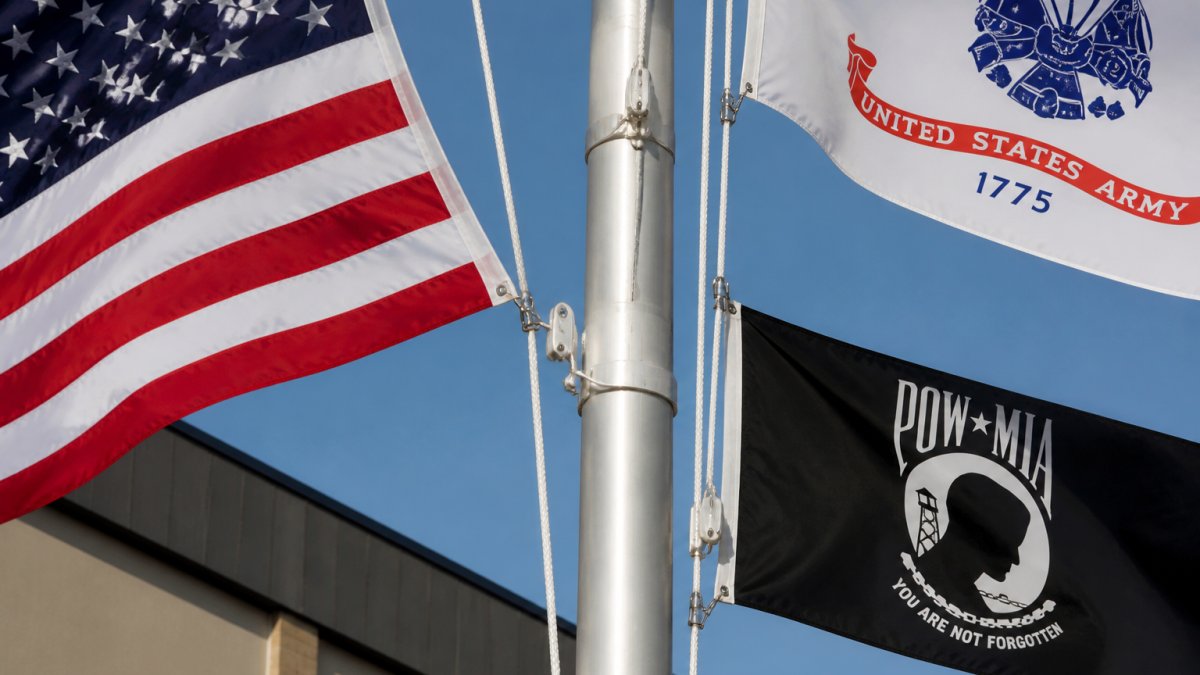
The essential components are clips, swivels, and halyards.
Install clips at measured intervals based on flag size and spacing.
For a single pole with multiple flags, consider a tandem clip system.
Swivels prevent halyards from twisting, which causes tangles and makes flags harder to raise and lower.
Material matters. Stainless steel resists rust and salt corrosion, and brass clips are durable and attractive. Avoid plastic components for permanent installations.
Installation steps:
- Measure and mark clip positions on the pole
- Attach clips using the hardware provided (typically set screws or bolts)
- Tighten all fasteners securely
- Install swivels on the halyard above each clip
- Thread halyards through clips and tie them to flags
- Test flag movement by raising and lowering each one
Check all fasteners monthly. Vibration from wind can loosen bolts and screws. Tighten anything that moves.
Sizing Flags for Single-Pole Display
Sizing flags for single-pole display affects both appearance and function.
Equal-sized flags create visual harmony. A 3×5 U.S. flag paired with a 3×5 state flag looks balanced and professional.
Pole height influences flag size.
Pole diameter affects clip capacity. Thicker poles accommodate more hardware. Check your pole's specifications before planning a multi-flag display.
Weight matters too.
Consider viewing distance: flags viewed from 50 feet need to be larger than those viewed from 10 feet.
US Patriot Colors offers American flags made in USA and imported options in various sizes. Nylon American flags are lightweight and handle wind well.
Maintaining Multiple Flags on One Pole
Maintaining multiple flags on one pole requires regular attention. Wind, weather, and UV exposure take a toll.
Inspect flags monthly for fraying edges, faded colors, torn sections, or broken grommets.
Clean flags gently with mild soap and water, avoiding harsh scrubbing.
Lubricate swivels occasionally with a light machine oil to keep them rotating smoothly; avoid heavy grease, which attracts dirt.
During severe weather, consider lowering flags to prevent damage. High winds can shred flags or break hardware.
Replace flags when worn beyond repair.
Displaying multiple flags correctly reflects respect for the symbols and institutions they represent.
Frequently Asked Questions
Can you fly a state flag on the same pole as the U.S. flag?
Yes. When displaying the U.S. flag and state flag on one pole, the U.S. flag must be positioned at the top. The state flag flies below it on the same pole. Ensure adequate spacing between them so neither flag overlaps or obscures the other during wind or movement.
What is the correct order for multiple flags on one pole?
The U.S. flag always occupies the top position on a single pole. Below it, arrange additional flags by official precedence: state flags, then organizational, military, or commemorative flags. Maintain equal spacing and ensure flags do not overlap. If flying flags of different nations, research specific protocol for that combination.
How far apart should flags be on a flagpole?
Flags should be spaced far enough apart that they do not overlap, tangle, or obscure one another, even in moderate wind. A practical guideline is to leave adequate pole space between flag clips. Exact spacing depends on flag size, pole height, and wind conditions in your area. Coastal or high-wind locations may require greater separation to prevent friction and wear.
Should flags on one pole be the same size?
Flags on the same pole should be the same size for a balanced, respectful display. Equal-sized flags ensure none is visually subordinate and prevent one from obscuring another. Check your flagpole's capacity and choose flag dimensions that fit comfortably within the available space without crowding.